目录
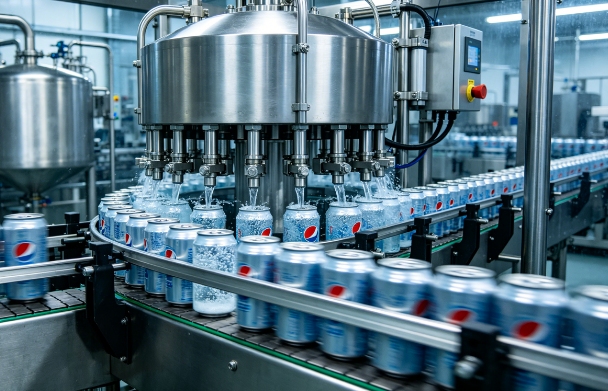
In today’s packaging industry, the bottle filling and capping machine is a critical piece of equipment widely used in beverage, food, pharmaceutical, and daily chemical production. As market competition intensifies and product quality standards continue to rise, manufacturers are placing higher demands on filling accuracy, operational stability, and automation levels. Choosing the right bottle filling and capping machine can significantly improve production efficiency, reduce labor costs, minimize product waste, and ensure consistent sealing quality.
1. Identify Product Characteristics and Industry Requirements
Before selecting a bottle filling and capping machine, it is essential to clearly understand the characteristics of the product and the specific requirements of the industry, as different products demand different technical solutions.
- Liquid type: water-like, viscous, particulate, or foaming liquids
The physical properties of the liquid directly affect the choice of filling technology. Water-like liquids are typically filled using gravity or flow-meter systems, while viscous products require piston or screw filling systems for accurate dosing. Liquids containing particles or prone to foaming require specialized filling designs to prevent splashing, overflow, or air entrapment, making it crucial to match the liquid type with the appropriate bottle filling and capping machine - Product category: food-grade, pharmaceutical, or chemical
Different industries impose different standards on equipment, materials, and construction. Food and pharmaceutical products generally require contact parts made of high-grade stainless steel, with smooth surfaces that are easy to clean and resistant to corrosion. Chemical products may require enhanced chemical resistance and stronger sealing structures. Understanding the product category helps ensure the selected bottle filling and capping machine meets both safety and durability requirements. - Hygiene and safety standards: GMP, FDA, or other certifications
For pharmaceutical and certain food applications, compliance with international or regional standards such as GMP or FDA is often mandatory. A bottle filling and capping machine designed to meet these standards typically features hygienic structures, minimal dead corners, and easy cleaning or CIP capabilities, supporting regulatory compliance and product safety.
2. Evaluate Production Capacity and Automation Level
Production output and automation are key factors in determining whether a bottle filling and capping machine can meet current and future manufacturing needs.
- Output per hour (BPH): suitability for current and future demand
When evaluating capacity, manufacturers should consider not only present production volumes but also potential business growth. A machine with insufficient output can limit productivity, while selecting a machine with slightly higher capacity allows room for expansion without immediate reinvestment. - Automation level: semi-automatic or fully automatic
Semi-automatic machines are often suitable for small-scale production or operations with lower labor costs. Fully automatic bottle filling and capping machines, on the other hand, significantly reduce manual intervention, improve consistency, and enhance overall operational efficiency, making them ideal for medium to large-scale production lines. - Compatibility with existing production lines
Seamless integration with conveyors, labeling machines, coding systems, and other downstream equipment is essential. A bottle filling and capping machine that easily integrates into an existing line helps optimize workflow, reduce installation complexity, and maximize overall line efficiency.
3. Bottle and Cap Adaptability
As product diversification increases, the flexibility of a bottle-filling and capping machine becomes increasingly important.
- Compatibility with different bottle shapes (round, square, or irregular)
Many manufacturers produce multiple product types using different bottle designs. A machine capable of handling various bottle shapes and sizes reduces the need for multiple machines and improves equipment utilization. - Quick changeover design to minimize downtime
Fast and simple format changeover is essential for operations that frequently switch between products. Efficient changeover mechanisms help reduce downtime, increase productivity, and allow manufacturers to respond quickly to changing market demands. - Support for multiple cap types (screw caps, press caps, tamper-evident caps)
Different caps require different capping methods and torque control. A high-quality bottle filling and capping machine should provide stable and accurate capping performance across various cap types to ensure proper sealing and prevent leakage or loose caps.
4. Machine Stability and Maintenance Cost
Long-term operational reliability is a critical factor when selecting a bottle filling and capping machine, as it directly affects production continuity and operating costs.
- Quality of core components
Key components such as motors, sensors, and control systems play a vital role in machine performance. High-quality components contribute to smoother operation, improved accuracy, and reduced failure rates. - Operational stability and failure frequency
Stable machine performance minimizes unexpected downtime and ensures consistent production output. Lower failure rates also help maintain product quality and protect production schedules. - Ease of maintenance and availability of spare parts
Machines designed for easy maintenance and equipped with standardized, widely available spare parts can significantly reduce maintenance time and costs. This ensures long-term cost efficiency and reliable operation.
5. Supplier Capability and After-Sales Service
Choosing a bottle-filling and capping machine also means selecting a long-term equipment partner.
- Industry experience and proven track record
Suppliers with extensive experience and successful application cases are better equipped to understand real production challenges and provide effective, customized solutions. - Technical support and operator training
Comprehensive technical support and training services help operators quickly become proficient with the machine, reducing the risk of improper operation and improving overall efficiency. - After-sales service and spare parts supply
Reliable after-sales support and timely spare parts availability are essential for maintaining long-term machine performance and minimizing production disruptions.
Conclusion
Selecting the right bottle filling and capping machine requires a comprehensive evaluation of product characteristics, production capacity, equipment performance, and supplier support. By carefully analyzing these factors and aligning them with current and future production needs, manufacturers can choose a solution that enhances efficiency, ensures product quality, and supports sustainable business growth.
0