目录
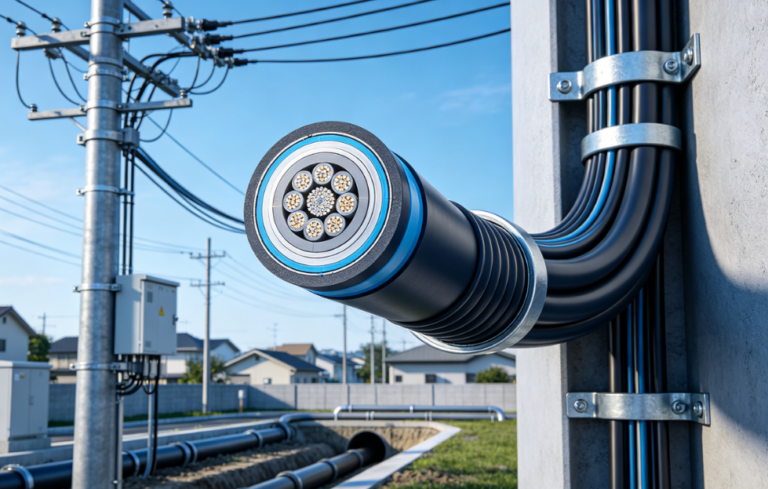
As data centers move toward higher bandwidth and denser architectures, fiber management becomes more complex. Traditional cabling often leads to congestion and slow deployment. The 24F MTP trunk cable offers a structured, pre-terminated solution that combines multiple fibers into one cable, helping simplify installation, improve efficiency, and support scalable high-density networks.
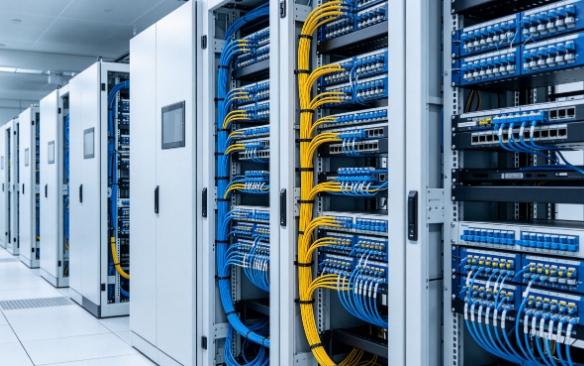
Simplifying Infrastructure Design and Reducing Cable Chaos
One of the primary advantages of the 24F MTP trunk cable lies in its ability to simplify network design at the physical layer. High-density deployments typically involve hundreds or even thousands of fiber connections, which can quickly become unmanageable if handled individually.
- Consolidated fiber architecture: Instead of deploying 24 separate fiber lines, a single trunk cable integrates all fibers into one structured unit, significantly reducing cable bulk.
- Cleaner rack layout: With fewer individual cables, racks remain organized, making it easier to plan pathways and maintain consistency across installations.
- Improved airflow management: Reduced cable congestion allows better air circulation inside cabinets, helping maintain optimal equipment temperature and performance.
This structured approach transforms complex cabling environments into more manageable and visually organized systems.
Faster Deployment Through Pre-Terminated Plug-and-Play Design
Speed is a critical factor in modern network rollouts, especially in large-scale data center projects. The 24F MTP trunk cable is designed to minimize installation time through factory pre-termination and standardized interfaces.
First, the connectors are pre-polished and tested before delivery, ensuring consistent quality and eliminating on-site termination errors.
Second, installation becomes a simple plug-and-play process, allowing technicians to connect systems quickly without specialized fiber splicing skills.
In addition, reduced installation steps mean fewer chances for mistakes, which improves overall deployment reliability.
This streamlined process not only accelerates project timelines but also reduces labor costs and dependency on highly skilled technicians.
Supporting High-Density and High-Speed Network Requirements
As network speeds continue to increase to 40G, 100G, and beyond, infrastructure must support higher fiber density without sacrificing performance. The 24F MTP trunk cable is specifically designed to meet these evolving demands.
- It enables efficient parallel optical transmission, which is essential for high-speed data communication.
- Its compact design allows more fibers to be deployed within limited rack and pathway space.
- It supports structured cabling systems that align with modern data center standards.
Because of these features, the 24F configuration provides a strong balance between density and flexibility, making it suitable for both current and future network upgrades.
Improving Maintenance, Identification, and Troubleshooting
Operational efficiency does not end after installation. In fact, long-term maintenance is where structured cabling solutions demonstrate their true value. The 24F MTP trunk cable simplifies ongoing management in several ways.
- Easier cable identification: Organized trunk structures make it straightforward to trace connections without confusion.
- Reduced risk of disruption: With fewer loose cables, technicians are less likely to accidentally disconnect critical links during maintenance.
- Faster troubleshooting: Clear cable paths and standardized connectors allow quicker fault isolation and repair.
These benefits help reduce downtime and ensure stable operation in mission-critical environments such as enterprise data centers and cloud infrastructure.
Enabling Scalable and Future-Ready Network Expansion
Scalability is a key requirement in modern IT infrastructure. As business demands grow, networks must expand without requiring complete redesigns. The 24F MTP trunk cable supports this need through its modular and flexible architecture.
For instance:
- New trunk cables can be added alongside existing ones without disrupting current operations
- Systems can be upgraded to higher bandwidth by reconfiguring connections rather than replacing entire cabling structures
- Compatibility with modular patch panels allows gradual expansion based on demand
This level of adaptability makes it easier for organizations to plan long-term infrastructure growth while controlling costs and complexity.
Conclusion
The 24F MTP trunk cable proves to be a highly effective solution for simplifying high-density fiber deployment. By reducing cabling complexity, accelerating installation, supporting high-speed networks, and improving maintenance efficiency, it addresses many of the core challenges faced in modern data centers. Its structured, scalable design not only enhances current operations but also prepares infrastructure for future expansion. For organizations seeking a reliable and efficient approach to fiber deployment, the 24F MTP trunk cable offers a practical and future-ready solution.
0