目录
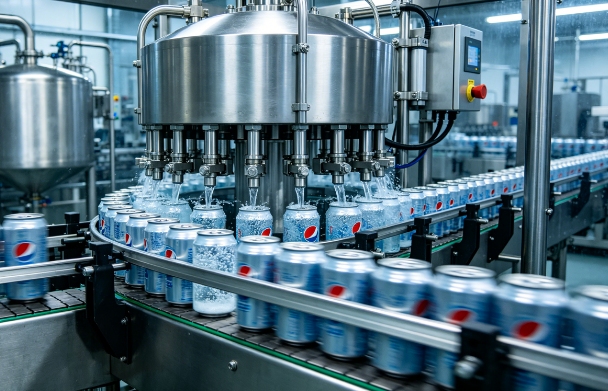
A soda can filling machine is specially designed to handle carbonated beverages such as soda, sparkling water, and energy drinks while preserving their dissolved CO₂ content. If carbonation is lost during filling, the drink will taste flat and fail to meet quality standards. Therefore, manufacturers rely on advanced filling systems that combine pressure control, temperature stability, and precise sealing technology. Understanding how a soda can filling machine maintains carbonation levels is essential for ensuring product quality, consumer satisfaction, and production efficiency in high-speed beverage lines.
Isobaric Filling Technology for Pressure Stability
The core mechanism that helps a soda can filling machine maintain carbonation is isobaric (equal-pressure) filling technology, which ensures the liquid is transferred without losing dissolved gas.
- Pressure equalization before filling:
The machine first balances the pressure inside the can with the filling tank to prevent CO₂ from escaping during liquid transfer. - Closed-loop filling environment:
The entire filling process occurs in a sealed system, reducing exposure to external air and minimizing carbonation loss. - Controlled valve opening system:
Filling valves open gradually under controlled pressure, allowing smooth liquid flow without sudden turbulence. - Foam suppression design:
Special anti-foaming structures reduce agitation, which helps retain CO₂ inside the beverage.
These mechanisms work together to ensure carbonation remains stable from tank to finished can.
Temperature Control and Beverage Stability
Temperature plays a key role in maintaining carbonation, and a soda can filling machine is designed to keep beverages at optimal conditions during filling.
- Low-temperature storage tanks
Carbonated drinks are typically kept at low temperatures because cold liquids retain CO₂ more effectively. - Pre-chilling systems for cans
Some production lines pre-cool empty cans to reduce pressure differences and prevent gas release. - Insulated pipelines
Specially designed pipelines minimize temperature fluctuations during transfer from storage to filling heads. - Real-time temperature monitoring
Sensors continuously track beverage temperature to ensure stable carbonation levels throughout production.
By controlling temperature precisely, the system reduces the risk of gas expansion and loss.
Vacuum and Counter-Pressure Filling Mechanisms
Advanced soda can filling machine systems use vacuum and counter-pressure technology to further protect carbonation during the filling process.
- Vacuum pre-evacuation:
Air is removed from the can before filling, reducing oxygen presence and improving CO₂ retention. - Counter-pressure filling method:
Liquid is introduced only when internal pressure matches the beverage tank, preventing sudden gas escape. - Gas return systems:
Excess CO₂ is recycled back into the system instead of being released into the environment. - Pressure balancing valves:
These valves ensure smooth pressure transitions during filling and sealing stages.
This combination of technologies significantly improves carbonation retention efficiency.
High-Precision Sealing and Capping Process
Even after filling, maintaining carbonation depends heavily on how quickly and securely the can is sealed by the soda can filling machine.
- Immediate sealing after filling:
Cans are sealed instantly after filling to minimize exposure to air. - Double-seam capping technology:
The can lid is tightly sealed using a double-seaming process that prevents gas leakage. - Leak detection systems:
Some machines include sensors that check sealing integrity before cans move to the next production stage. - Minimal headspace control:
Machines ensure consistent liquid levels to reduce oxygen presence inside the can.
These sealing mechanisms ensure that carbonation remains locked inside the beverage.
Automation and Real-Time Process Control
Modern soda can filling machine systems rely on intelligent automation to maintain consistent carbonation levels across large production volumes.
PLC control systems
Programmable logic controllers manage pressure, flow rate, and filling timing with high precision.
Real-time pressure monitoring
Sensors detect pressure changes instantly and adjust system parameters automatically.
High-speed synchronization
Filling, sealing, and conveying systems are synchronized to reduce delay and carbonation loss.
Error correction mechanisms
If deviations occur, the system automatically compensates to maintain stable output quality.
These intelligent controls ensure consistent carbonation even during high-speed production.
Conclusion
In conclusion, a soda can filling machine maintains carbonation levels through a combination of isobaric filling technology, temperature control, vacuum and counter-pressure systems, and high-precision sealing processes. Each stage of the filling line is carefully designed to minimize CO₂ loss and ensure that beverages retain their freshness and effervescence. With advanced automation and real-time monitoring, modern filling systems can consistently produce high-quality carbonated drinks on a large scale. As beverage production continues to demand higher efficiency and quality standards, carbonation-preserving filling technology remains essential for delivering stable, refreshing, and market-ready products.
0