目录
Laser processing technology plays a crucial role in cutting, engraving, welding, and marking applications. Among the most widely used solutions are fiber laser equipment and CO2 laser systems, both of which offer unique advantages depending on the material type and production requirements. As industries such as automotive, electronics, aerospace, and metal fabrication continue to demand higher precision and efficiency, understanding the differences between these two technologies becomes essential. While CO2 lasers have been widely used for decades, fiber laser equipment has rapidly gained popularity due to its superior efficiency, lower maintenance needs, and stronger performance in metal processing applications.

Fundamental Technology Differences Between Fiber and CO2 Lasers
The core difference between fiber laser equipment and CO2 laser systems lies in how the laser beam is generated and transmitted.
- Fiber laser generation mechanism:
Fiber lasers use solid-state optical fibers doped with rare-earth elements to generate and amplify laser beams. The beam is then transmitted through a flexible fiber cable, ensuring high efficiency and stability. - CO2 laser generation mechanism:
CO2 lasers rely on gas mixtures (carbon dioxide, nitrogen, helium) excited by electrical energy to produce infrared laser beams, which are then directed through mirrors. - Beam delivery method differences:
Fiber laser systems use fiber optics for direct beam transmission, while CO2 systems depend on complex mirror alignment, which can require frequent calibration. - Energy conversion efficiency gap:
Fiber laser equipment typically converts a higher percentage of electrical energy into usable laser output compared to CO2 systems, making it more efficient overall.
These fundamental differences directly influence performance, maintenance, and long-term operational costs.
Material Compatibility and Application Scope
One of the most important comparisons between fiber laser equipment and CO2 laser systems is their suitability for different materials.
① Fiber laser equipment material advantages
Fiber lasers are highly effective for processing metals such as stainless steel, carbon steel, aluminum, brass, and copper, making them ideal for industrial manufacturing.
② CO2 laser material strengths
CO2 systems perform better on non-metal materials such as wood, acrylic, glass, leather, and textiles, making them popular in packaging and advertising industries.
③ Industrial application differences
Fiber laser systems dominate metal fabrication, automotive parts, and precision engineering, while CO2 lasers are more commonly used in non-metal engraving and cutting.
④ Flexibility in production environments
Fiber laser equipment is better suited for heavy-duty industrial use, whereas CO2 lasers are often preferred for artistic or material-diverse applications.
These distinctions help manufacturers choose the right system based on their production needs.
Efficiency, Speed, and Operational Performance
When comparing performance, fiber laser equipment generally demonstrates higher efficiency and faster processing speeds than CO2 laser systems.
- Higher cutting speed on metals:
Fiber lasers cut reflective metals more efficiently, significantly increasing production output in industrial environments. - Lower energy consumption:
Fiber systems require less power to achieve the same or higher output levels, reducing operational costs. - Faster response time:
Solid-state design allows quicker beam activation and switching, improving production cycle speed. - Stable long-term operation:
Fiber lasers maintain consistent performance even during extended production runs, while CO2 systems may require more frequent recalibration.
These advantages make fiber laser technology more suitable for large-scale manufacturing.
Maintenance Requirements and Cost Efficiency
Maintenance and long-term cost are major factors when comparing fiber laser equipment with CO2 laser systems.
- Reduced maintenance complexity (Fiber):
Fiber laser systems have fewer moving parts and no mirror alignment requirements, leading to lower maintenance frequency. - Higher maintenance demand (CO2):
CO2 lasers require regular mirror cleaning, gas replacement, and optical path adjustments. - Longer service life (Fiber):
Fiber laser sources can operate for tens of thousands of hours with minimal degradation. - Overall cost efficiency:
Although fiber laser equipment may have a higher initial investment, it typically offers lower long-term operating costs due to reduced maintenance and energy usage.
This makes fiber laser systems more economically attractive for industrial-scale production.
Precision, Stability, and Automation Integration
Another key comparison point is precision and compatibility with modern automated manufacturing systems.
Superior beam precision in fiber systems
Fiber laser equipment produces a smaller, more focused beam, resulting in higher cutting accuracy and cleaner edges.
Better stability under continuous operation
Fiber systems maintain consistent performance even in high-demand production environments.
Stronger automation compatibility
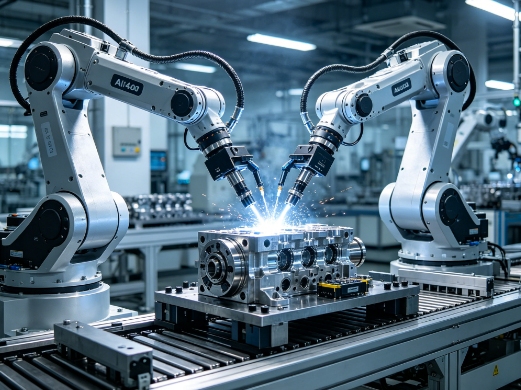
Fiber laser machines integrate easily with robotic arms, CNC systems, and smart factory platforms.
CO2 system limitations in automation
CO2 lasers are less commonly integrated into advanced automation setups due to their more complex optical alignment requirements.
These differences make fiber laser systems more suitable for Industry 4.0 and smart manufacturing environments.
Conclusion
In conclusion, fiber laser equipment and CO2 laser systems each have their own strengths, but they are optimized for different industrial applications. Fiber laser technology offers superior efficiency, faster processing speed, lower maintenance costs, and stronger performance in metal processing, making it ideal for modern manufacturing and automated production lines. CO2 lasers, on the other hand, remain effective for non-metal materials and creative applications. As industrial demand continues to shift toward higher efficiency and automation, fiber laser systems are increasingly becoming the preferred choice for large-scale, high-precision manufacturing environments.
0