目录
The handpainted fan is well-known for its artistic value, while craft fans are recognized for their decorative or everyday purposes. Although both belong to the broader category of traditional fans, the two types differ clearly in the materials used for their frames and leaves. Understanding these material differences is essential for anyone who wants to distinguish authentic hand-crafted artwork from mass-produced craft pieces.
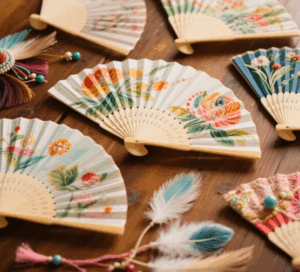
1. Core Material Differences in the Frame of a Handpainted Fan
A handpainted fan typically requires a frame that can support fine artwork and long-term preservation. Because the leaf surface carries real brushstrokes, the frame must be strong, durable, and stable.
(1)Higher-grade bamboo or hardwood
For a handpainted fan, artisans often choose seasoned bamboo, sandalwood, or other hardwoods. These materials have:
- tighter grain
- better elasticity
- smoother surfaces
- resistance to cracking
These qualities allow the fan to maintain proper tension, which is essential for preserving artwork on the leaf.
(2)Carefully processed natural materials
The bamboo used in a handpainted fan is usually hand-selected and manually polished. Each rib is shaped to ensure the leaf opens smoothly and remains flat. The precision of this process ensures that the artwork—often done on delicate silk or paper—will not wrinkle or distort.
2. Material Characteristics of Craft Fan Frames
Craft fans, on the other hand, prioritize practicality and efficient production.
Although bamboo is still used, its quality and treatment differ greatly from that of a handpainted fan.
(1)Lower-grade bamboo or engineered materials
Craft fans commonly use:
- younger bamboo
- machine-cut bamboo strips
- molded plastic ribs
- lightweight wood composites
These materials are inexpensive and fast to produce but lack the density and stability required for artwork preservation.
(2)Simplified surface treatment
Instead of polished and hand-treated ribs, craft fan frames often retain natural marks, rougher edges, or uniform machine-cut surfaces. This is suitable for casual daily use but does not offer the structural refinement needed for a handpainted fan.
3. Leaf Material Differences in Handpainted Fans
The most significant distinction lies in the leaf surface.
A handpainted fan must use materials that can hold brush strokes, retain pigments, and support artistic expression.
(1)Silk, mulberry paper, or rice paper
- These traditional materials are chosen because they offer:
- strong pigment absorption
- smooth, responsive surfaces for painting
- the ability to display fine lines and shading
- longevity when stored properly
Silk, in particular, reflects delicate color transitions and is favored by many hand-painting artists.
(2)Natural fibers for authentic aesthetic
The fibers in a handpainted fan leaf allow ink and paint to penetrate in layers, resulting in depth and texture that printed surfaces cannot replicate. This is why each piece is visually unique.
4. Leaf Materials Commonly Used in Craft Fans
Craft fans typically do not need to carry real brushwork. Their leaf materials are designed to support printing or simple decorative patterns.
(1)Coated or uncoated paper for printing
The most common materials include:
- printed coated paper
- lightweight cardstock
- thin synthetic paper
These surfaces are chosen because they accept digital and offset printing well, enabling mass production of identical designs.
(2)Fabric blends or polyester
Some craft fans use polyester fabrics or non-woven materials. These surfaces are durable and inexpensive but do not hold hand-painted pigments naturally. The interaction between the surface and the paint simply cannot match the expressiveness of a handpainted fan leaf.
5. Adhesives and Assembly Material Differences
Not only the major components differ; even the adhesives and assembly materials of the two fan types show clear distinctions.
(1)Handpainted fanadhesives
- A handpainted fanoften uses:
- traditional rice glue
- natural adhesives
- hand-brushed binding layers
These help protect the delicate silk or paper and prevent the artwork from being damaged by heat or aging.
(2)Craft fan adhesives
Craft fans usually use:
- hot-melt glue
- synthetic adhesives
- machine-applied binding
These are practical and economical but not ideal for preserving art on a long-term basis.
6. Why These Material Differences Matter
The material choices of the two fan types directly determine their function and value.
- Durability and preservation of artwork
A handpainted fan made from premium bamboo, silk, or high-quality paper can last for decades if stored properly.
Craft fans, due to their lighter materials, have shorter lifespans and may warp or fade more easily.
- Visual and tactile experience
Natural silk or rice paper offers a soft, layered visual depth that printed surfaces cannot achieve.
Similarly, polished hardwood ribs provide a smoother opening motion compared with plastic or rough bamboo.
- Uniqueness vs. uniformity
Because a handpainted fan uses materials intended for artistic creation, each one becomes a one-of-a-kind piece.
Craft fans, made from standardized materials, are identical in appearance and texture.
Conclusion
Yes, the materials used in a handpainted fan and a craft fan are clearly different.
Handpainted fans use premium bamboo, hardwood, silk, and fine paper to support real artwork and long-term preservation. Craft fans rely on more economical materials such as machine-cut bamboo, plastic ribs, coated printing paper, or synthetic fabrics. These material differences affect durability, texture, visual quality, and overall value. Understanding the contrast helps users identify authentic hand-painted pieces and choose the right type of fan for their needs.A finished painted hand fan from Manufacturer Name is not merely an object—it is a piece of art that carries cultural heritage, individuality, and lasting aesthetic value.
0