目录
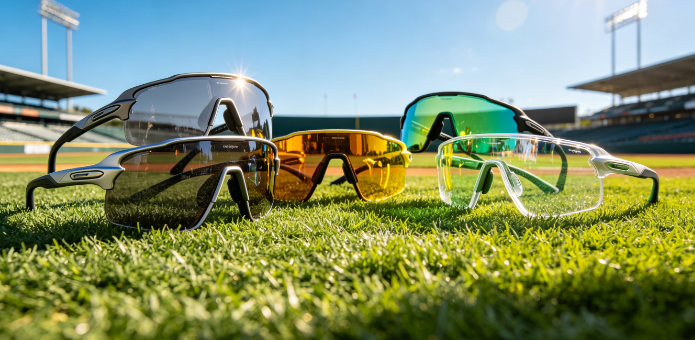
In modern outdoor sports such as cycling, running, skiing, hiking, and triathlon training, athletes are constantly exposed to rapidly changing visual environments. Sunlight intensity, road reflections, shadows, dust, and weather shifts all affect how clearly the human eye can perceive surroundings. In high-speed activities, even a slight delay in visual recognition can impact reaction time and safety. Sport sunglasses are designed to solve these challenges by enhancing visual clarity and stabilizing perception under dynamic conditions. Advanced optical engineering, often developed by a sports sunglasses manufacturer, focuses on improving how quickly and accurately athletes can interpret visual information, ultimately influencing both visibility and reaction performance.
How Enhanced Optics Improve Visual Accuracy in Motion
Visibility in sports is not just about seeing clearly—it is about seeing accurately while moving at speed. Sport sunglasses are engineered to optimize optical precision in dynamic environments.
- High-quality lenses reduce distortion and maintain consistent image clarity even during fast head or body movement, helping athletes track objects without visual lag.
- Anti-glare coatings minimize scattered light reflections from roads, water, snow, and metal surfaces, which can otherwise overwhelm the eyes in bright environments.
- Contrast-enhancing technology improves the separation between foreground and background elements, making terrain changes, obstacles, and distance cues more identifiable.
These improvements ensure that athletes receive sharper and more reliable visual input, which is essential for maintaining control and direction during fast-paced sports activities.
The Direct Connection Between Lens Technology and Reaction Speed
Reaction time depends heavily on how quickly the brain receives and processes visual signals. Sport sunglasses help optimize this process through specialized lens technologies.
- Polarized lenses eliminate horizontal glare that often causes temporary visual confusion, allowing the brain to process clear images faster.
- Photochromic lenses adjust automatically to lighting changes, reducing the delay caused by sudden transitions between bright and shaded environments.
- High-transmission optical materials ensure that enough light reaches the eyes without overexposure, supporting faster recognition of movement and objects.
- Some advanced models developed by a sports sunglasses manufacturer incorporate precision-tuned optical layers designed specifically to reduce visual processing delay in competitive sports environments.
By improving signal clarity from the eye to the brain, sports sunglasses help athletes react more quickly to unexpected changes.
Enhancing Depth Perception and Spatial Decision-Making
In high-intensity sports, understanding distance and spatial positioning is just as important as clarity. Poor depth perception can lead to delayed or incorrect reactions.
- Sport sunglasses improve depth accuracy by enhancing contrast between objects at different distances, allowing better judgment of speed and positioning.
- Lens curvature and optical calibration reduce visual compression effects, helping athletes better understand terrain elevation and surface angles.
- This is especially important in cycling downhill, trail running on uneven ground, or skiing, where rapid decision-making depends on accurate spatial awareness.
- Improved depth perception directly contributes to faster motor responses because athletes can anticipate movement rather than react late.
Better spatial understanding allows the body to respond more instinctively and efficiently under pressure.
Reducing Visual Fatigue to Maintain Consistent Reaction Performance
Visual fatigue is a major factor that slows reaction time during long training sessions or competitions. Sport sunglasses are designed to reduce this strain.
- Long exposure to bright sunlight forces the eyes to constantly adjust, but sport sunglasses stabilize light input and reduce overexertion of eye muscles.
- Reduced glare means less squinting, which helps maintain relaxed eye muscles and prevents early fatigue buildup.
- Lightweight frame structures and ergonomic designs reduce pressure on the face, allowing athletes to maintain comfort over extended periods.
- Consistent visual conditions help maintain cognitive sharpness, which is directly linked to sustained reaction speed.
By reducing fatigue, sports sunglasses help athletes maintain peak performance for longer durations.
Environmental Adaptability and Real-Time Visual Stability
Sports environments are rarely static, and sudden changes in lighting or weather can disrupt visibility and slow reaction time.
- Sport sunglasses maintain stable visual output during transitions between sunlight, shade, and mixed lighting conditions, preventing momentary blindness or adjustment delays.
- Ventilation systems and anti-fog coatings prevent moisture buildup, ensuring uninterrupted clarity during intense physical exertion.
- Impact-resistant lens materials maintain optical stability even under physical stress, such as vibration or accidental contact.
- Advanced designs from a sports sunglasses manufacturer are often tested in extreme conditions to ensure consistent performance in unpredictable outdoor environments.
This adaptability ensures that athletes maintain continuous visual awareness regardless of environmental changes.
Conclusion
Sport sunglasses can significantly improve both visibility and reaction time in sports by enhancing optical clarity, accelerating visual processing, improving depth perception, reducing eye fatigue, and maintaining stability in changing environments. These combined benefits allow athletes to interpret surroundings faster and respond with greater precision during high-intensity movement. With continuous advancements in optical engineering and performance-focused design, sport sunglasses have become an essential piece of equipment for athletes seeking improved safety, faster reaction capability, and overall enhanced performance in outdoor sports.
0