目录
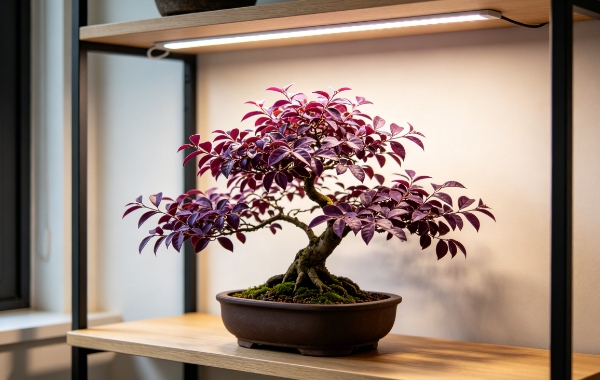
The ficus s shape tree is a widely used ornamental plant in interior decoration and landscape design, valued for its elegant curved trunk and lush green canopy. Many growers choose it for homes, hotels, offices, and commercial environments because it provides both natural beauty and structured artistic form. One of the most common concerns relates to its growth rate, as well as whether it can consistently maintain its S-shaped structure over time. In reality, its growth speed is moderate and highly controllable, but maintaining its curved form requires ongoing care. Factors such as lighting, pruning, watering, and environmental stability all play important roles in shaping both its growth rate and long-term appearance.
Natural Growth Speed of Ficus S Shape Trees
The growth rate of a ficus s shape tree is generally steady rather than rapid, which makes it suitable for shaping and long-term maintenance.
- Moderate vertical growth pattern: The plant typically grows at a controlled pace, allowing growers to manage its structure without frequent, drastic trimming.
- Indoor vs outdoor difference: Indoor plants usually grow more slowly due to limited light and airflow, which actually helps maintain the S shape more easily.
- Root space limitation impact: When grown in containers, restricted root expansion naturally reduces growth speed and encourages stability.
This moderate growth behavior is one of the main reasons the ficus’s shape is widely used in decorative landscaping.
Key Environmental Factors Affecting Growth Rate
Several external conditions directly influence how quickly a ficus tree develops.
- Light exposure intensity:
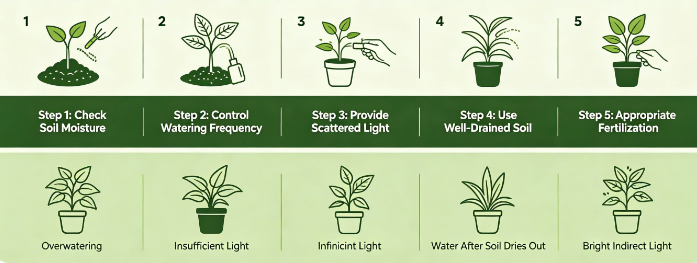
Bright indirect sunlight promotes healthy photosynthesis, while insufficient light leads to slow, weak, and uneven growth patterns. - Watering consistency:
Stable moisture levels support continuous growth, but overwatering or underwatering can significantly slow development and damage roots. - Nutrient balance in soil:
Proper fertilization encourages steady leaf and branch growth, but excessive nutrients may cause uncontrolled stretching that weakens the structure. - Temperature stability:
Warm and consistent temperatures support active growth, while sudden temperature changes can temporarily pause development.
Together, these factors determine whether the plant grows slowly, moderately, or aggressively in a given environment.
Methods to Maintain the S Shape During Growth
Maintaining the curved structure of a ficus s shape tree requires continuous shaping techniques rather than one-time training.
- Directional light adjustment:
By controlling the direction of light exposure, growers can guide the trunk to grow along the intended curved path. - Support structure usage:
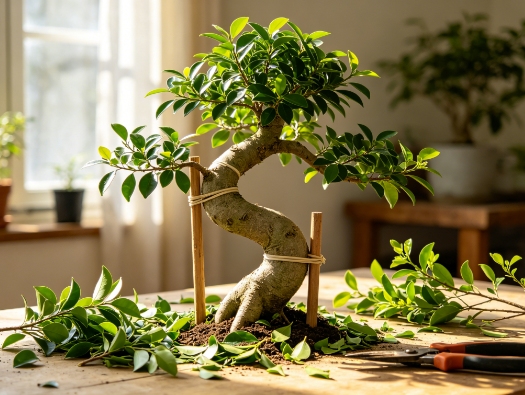
Stakes, soft ties, or shaping wires are used to gently guide the trunk into the desired S curve during growth stages. - Step-by-step bending process:
The curve is formed gradually over time to avoid trunk damage and ensure natural adaptation to the shape. - Regular pruning maintenance:
Removing unwanted shoots helps maintain a clean trunk line and prevents distortion of the S structure.
These methods ensure the plant retains its artistic form while continuing to grow healthily.
Growth Management and Long-Term Stability
To ensure that an S-shaped banyan tree maintains both healthy growth and structural balance, it is crucial to formulate a long-term management strategy.
- Controlled fertilization schedule:
Balanced feeding supports steady growth without causing excessive elongation that disrupts the shape. - Pot size control strategy:
Keeping the plant in appropriately sized containers helps limit overgrowth and stabilize its structure. - Humidity and airflow regulation:
Proper air circulation reduces disease risk and supports consistent leaf development. - Routine inspection and correction:
Regular checks allow early correction of uneven growth before it affects the S shape significantly.
These management practices help maintain both aesthetics and plant health over time.
Common Growth Challenges Affecting Shape Maintenance
Even with proper care, a ficus s shape tree may encounter issues that affect its growth and structural integrity.
- Uneven branch development:
One side may grow faster due to uneven lighting, leading to an imbalance in the curved design. - Rapid vertical shoots:
Suddenly, strong shoots can break the visual flow of the S shape if not pruned early. - Loss of flexibility in mature trunks:
As the tree ages, the trunk becomes harder to reshape, making early maintenance critical. - Environmental stress response:
Changes in location, watering, or temperature may temporarily disrupt growth consistency.
Addressing these issues early is key to preserving both health and structure.
Conclusion
The growth speed of a ficus s shape tree is generally moderate, making it highly suitable for controlled shaping and long-term ornamental use. Its development is influenced by light, water, nutrients, and environmental stability, while maintaining its curved structure requires continuous pruning, support, and directional growth control. Although challenges such as uneven growth or structural rigidity may occur, they can be effectively managed with proper care techniques. Overall, with consistent maintenance, the ficus s shape tree can grow steadily while preserving its elegant and artistic curved form for many years.
0