目录
In commercial buildings, hotels, hospitals, and public facilities, selecting a cost-effective soap dispensing solution is an important decision that directly impacts long-term operational expenses. While the initial purchase price is often considered first, the true cost of a soap dispenser depends on durability, maintenance frequency, soap consumption efficiency, and user behavior influence. Different designs offer different advantages, and understanding these differences helps facility managers make smarter long-term investments. In many cases, consulting a professional soap dispenser manufacturer helps identify a solution that balances initial costs, long-term savings, and stable performance.
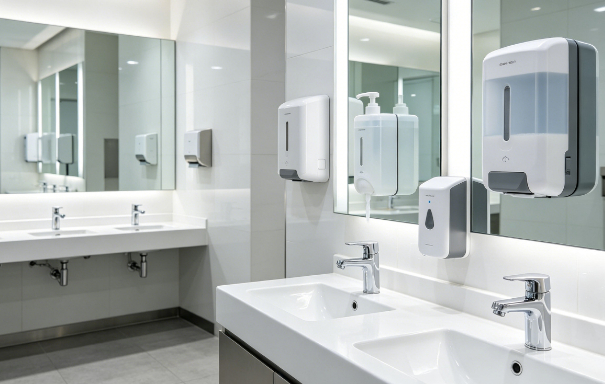
Manual Pump Soap Dispensers: Low Initial Cost but Higher Long-Term Usage
Manual pump soap dispensers are one of the most common and affordable options available. However, their long-term cost-effectiveness depends heavily on usage conditions and maintenance control.
Key characteristics include:
- Low purchase cost advantage: Manual dispensers are inexpensive to install, making them attractive for small offices or low-budget facilities.
- Risk of Increased Soap Consumption: Users frequently press repeatedly or apply excessive force, resulting in the excessive dispensing of liquid soap—thereby increasing overall soap consumption over time.
- Frequent Maintenance Requirements: The pump head may become clogged or worn, necessitating periodic cleaning or replacement.
- Contact-based operation issues: Physical touch increases contamination risk, which may lead to higher cleaning costs in high-traffic areas.
While affordable initially, manual systems may become more expensive in the long run due to uncontrolled soap usage and maintenance needs.
Automatic Sensor Soap Dispensers: Higher Efficiency and Long-Term Savings
Automatic or touchless soap dispensers are widely recognized for their efficiency and long-term cost-saving potential, especially in high-traffic environments.
Important benefits include:
- Controlled dispensing volume: Each activation releases a fixed amount of soap, preventing waste caused by overuse.
- Reduced human contact: Touchless operation improves hygiene and reduces cleaning and sanitation costs.
- Energy-efficient modern designs: Many models use low-power sensors or rechargeable systems, reducing operational expenses.
- Optimized user behavior: Automatic systems discourage repeated activation, ensuring consistent soap usage per person.
Although the initial investment is higher, these dispensers often deliver better long-term cost efficiency through reduced waste and maintenance.
Foam Soap Dispensers: Maximum Efficiency in Soap Consumption
Foam soap dispensers are specifically designed to reduce soap usage while maintaining effective cleaning performance, making them one of the most cost-efficient designs over time.
Key advantages include:
- Air-mixed dispensing technology: Liquid soap is converted into foam, allowing users to achieve full hand coverage with less product.
- Significant reduction in soap volume usage: Compared to liquid dispensers, foam systems can reduce soap consumption by up to 50% or more.
- Improved user experience: Foam spreads more easily, encouraging proper handwashing with smaller amounts.
- Lower refill frequency: Reduced soap usage means fewer refills, decreasing maintenance labor costs.
These features make foam-based systems highly suitable for large facilities focused on long-term savings.
Wall-Mounted and Bulk-Refill Systems: Reducing Maintenance Costs
Another important design category focuses on installation structure and refill efficiency, which directly affects long-term operating costs.
Key considerations include:
- Large-capacity storage tanks: Reduce refill frequency and labor costs in high-usage environments.
- Wall-mounted installation design: Frees up space and minimizes accidental damage or spillage.
- Bulk refill compatibility: Allows cost-effective purchasing of soap in larger quantities, reducing unit price.
- Durable housing materials: Stainless steel or reinforced plastic reduces replacement frequency and long-term maintenance expenses.
Many facility planners work with a soap dispenser manufacturer to customize capacity and installation design for maximum efficiency.
Cost Efficiency Comparison and Long-Term Value Analysis
When evaluating different soap dispenser designs, long-term cost efficiency is determined by a combination of usage regulation, product durability, and ongoing maintenance needs.
Key evaluation points include:
- Soap consumption control level: Foam and automatic systems outperform manual pumps in reducing waste.
- Maintenance frequency: Durable, well-designed systems significantly lower repair and replacement costs.
- Total lifecycle cost: While some systems cost more initially, they often deliver lower total cost over time.
A balanced evaluation helps facility managers select the most cost-effective solution based on real usage conditions.
Conclusion
The most cost-effective soap dispenser design for long-term use depends on balancing initial investment, soap consumption efficiency, maintenance requirements, and hygiene performance. Manual dispensers offer low upfront cost but higher long-term waste, while automatic and foam systems provide better control and reduced operational expenses. Wall-mounted and high-capacity designs further enhance efficiency by reducing maintenance frequency and improving durability. By carefully evaluating usage scenarios and, when necessary, consulting an experienced soap dispenser manufacturer, businesses can select a solution that minimizes total lifecycle cost while maintaining high hygiene standards and operational efficiency.
0