目录
Given the rise in production needs, it becomes necessary to have fast filling processes, quality products, and reduced labor costs. An automatic filling machine may help in achieving this goal, but using inappropriate filling machines will only mean having wrong filling procedures, wastage of the products, and downtime. There are several other factors that need to be considered when choosing the right machinery besides the machine speed and price. These include product properties, the technology of filling, and even container type.
1. Understand Your Product Before Choosing an Automatic Filling Machine
Product characteristics influence the filling process, pumping mechanism, and equipment setup.
Liquid Viscosity and Flow Characteristics
Low-viscosity liquids such as water and alcohol can easily move; therefore, they can be transported using appropriate gravity and pumping systems. Medium-viscosity liquids such as liquid soap and shampoo require the correct pumping capacity and nozzles. Thick liquids such as creams, syrups, and sauces should be transported using a piston system.
Powder, Granules, and Special Materials
When it comes to factors such as flow, bulk density, and hygroscopicity of powders, fillers can be taken into consideration. The particles need to be treated gently because there is a high probability of cracking during feeding or filling processes.
Other things such as chemical properties can also be considered. The contact material needs to be compatible with corrosive fluids; however, flammable fluids will require some particular safety design considerations.
2. Compare Different Types of Automatic Filling Machines
All filling systems fill products differently. Consider the dosing principle, product-contact parts, and container specifications before selecting an appropriate filling system.
Peristaltic Pump Filling Machines
The peristaltic fillers work by using rotating rollers that squeeze the flexible tubing in order to propel the liquid forward towards the filling nozzle. In the pump itself, it is the tubing where the liquid comes into contact, as opposed to the pumping device.
Piston Filling Machines
Piston filling pumps use the movement of pistons to suck the product into a measuring chamber and dispense a precise amount. This type of dispenser is appropriate for many viscous products such as liquid soap, lotion, and syrup. For instance, ZONESUN’s ZS-YT2T-2PXD Automatic 2 Heads Servo Piston Pump Liquid Soap Filling Machine employs a servo-controlled piston dispensing system for liquid soap.
Vacuum Filling Machines
The vacuum filler utilizes a pressure differential to suck the fluid into suitable bottles. These types of fillers are mainly used in perfumes where the fluid, bottle, and method of filling are compatible. Before settling on this type of filler, it is important to ensure that the bottle is rigid and that the neck shape, sealing, and fill height are favorable.
Auger Filling Machines
The Auger filler works by rotating a screw for the discharge of powder. Its performance will be dictated by the characteristics of the powder, such as flowability, bulk density, moisture sensitivity, and feed consistency. The screw design, agitation, and dust management must be appropriate to the material. A trial filling will determine this.
Multihead Weighing Filling Machines
Multihead weighing systems use portions from multiple weighing hoppers in order to achieve the desired weight target. These machines are most commonly applied when the products are granular and have distinct pieces, for example, snacks or select prepared foods. The size, stickiness, fragility, and feeding characteristics of the product will influence the suitability of multihead weighing.
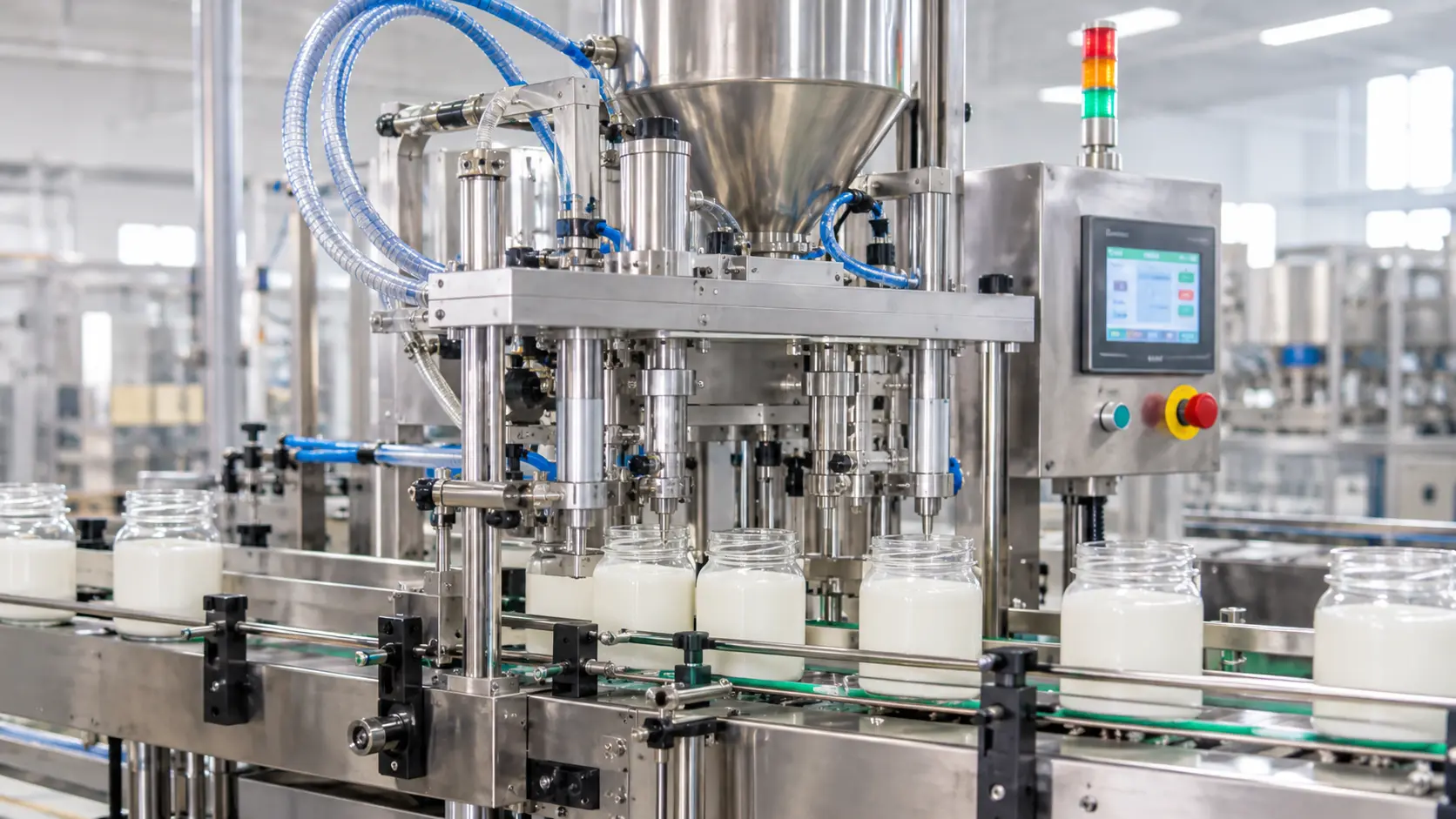
3. Match Automatic Filling Machine Capacity With Your Production Requirements
Machine capacity should reflect actual production demand rather than advertised speed alone.
Calculate the Required Production Capacity
The following formula may be employed to estimate theoretical output: Output per hour = No. of filling heads x Filling cycles per minute x 60.
That is, the output of a machine with four filling heads operating at the speed of 10 cycles per minute will theoretically be: 4 x 10 x 60 = 2,400 bottles per hour. However, there are other elements in the production process, such as placing containers, refilling material, adjustments, etc. Assuming an efficiency level of 85%, the output will be: 2,400 x 85% = 2,040 bottles per hour.
This is just an example and does not mean the machine will produce 2,040 bottles per hour.
Consider Filling Heads and Production Line Balance
If you add more filling heads, you can generate more output, but you must consider the entire packaging line. For instance, if there are 2,000 bottles filled per hour in the filling machine, but only 1,500 per hour in the capper, then the capper is the bottleneck in this process.
Plan for Future Production Changes
Think about whether your business might add products, alter the size of the containers, or have more production shifts. It is possible for the equipment to be versatile by using adjustable filling volumes, replacing nozzles, and making format changes easily.
Conclusion
Knowledge of product characteristics, the filling technique, and manufacturing capacity is needed for the selection of the automatic filling machine. Every kind of material requires different ways of handling and dosing. Before buying the machine, examine your product characteristics, required production rate, container characteristics, and tolerance. The compatibility of the filling machine with the current packaging process should be considered as well. It is essential to understand that the best machine does not necessarily mean the fastest one. It is a machine that works for your products and production rate and is also affordable.
0