目录
In modern manufacturing and packaging industries, maintaining hygiene and product quality is essential. The bottle washer working principle plays a critical role in ensuring that bottles are thoroughly cleaned before filling and sealing. Whether used in food, beverage, pharmaceutical, or chemical industries, bottle washing machines are designed to remove contaminants efficiently while optimizing water and energy usage. Understanding how this process works can help businesses choose the right equipment and improve production performance.
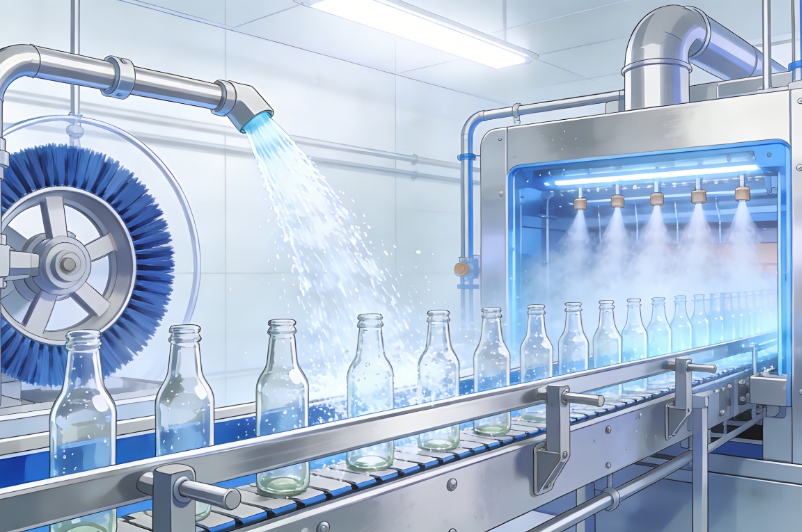
Pre-Rinsing Stage: Removing Loose Contaminants
The first step in the bottle washer working principle focuses on eliminating visible debris and residues from the bottles. This stage gets the bottles ready for more thorough cleaning.
- Initial water spray: Bottles are subjected to high-pressure water jets to wash away dust, dirt, or leftover particles.
- Inversion mechanism: Many machines invert bottles to allow gravity to assist in removing loose contaminants.
- Pre-soaking (optional): In some systems, bottles are briefly soaked to loosen stubborn residues before the main wash.
This stage is crucial because it prevents contamination from spreading to later cleaning phases and ensures a more effective overall washing process.
Main Washing Process: Deep Cleaning with Detergents
After pre-rinsing, the machine moves into the core cleaning phase, which is central to the bottle washer’s working principle.
- Detergent application: Specialized cleaning solutions are sprayed or circulated to break down oils, grease, and organic residues.
- Temperature control: Heated water is often used to enhance the cleaning power of detergents and ensure sanitation.
- Mechanical action: Rotating nozzles or brushes may be used to scrub the interior and exterior surfaces of bottles.
This stage ensures that even microscopic contaminants are removed, making the bottles safe for reuse or filling.
Rinsing Stage: Eliminating Residual Chemicals
Once the cleaning agents have done their job, the next step in the bottle washer working principle is thorough rinsing to remove any remaining chemicals.
- Multi-stage rinsing: Bottles are rinsed multiple times using clean or purified water to ensure no detergent residue remains.
- Use of filtered water: Advanced systems use filtered or deionized water to prevent mineral deposits or contamination.
- Spray precision: Carefully designed nozzles ensure that all bottle surfaces are evenly rinsed.
This step is essential for maintaining product safety, especially in industries with strict hygiene standards.
Sterilization and Drying: Ensuring Hygiene and Readiness
The final operational phase in the bottle washer working principle focuses on preparing bottles for immediate use.
- Sterilization methods: Bottles may be exposed to hot water, steam, or chemical disinfectants to eliminate bacteria and microorganisms.
- Air drying systems:High-speed air jets or heated air remove moisture from the bottles efficiently.
- Controlled environment: Some machines operate in enclosed systems to prevent recontamination after cleaning.
This stage guarantees that bottles are not only clean but also hygienic and ready for filling without delay.
Automation and Efficiency Features: Enhancing Performance
Modern machines incorporate advanced features that optimize the bottle washer’s working principle and improve productivity.
- Automated control systems: Programmable settings allow operators to adjust washing parameters based on bottle type and industry needs.
- Water recycling systems: Used water is filtered and reused to reduce consumption and operational costs.
- Energy-saving design: Efficient heating and pumping systems minimize energy usage while maintaining performance.
These innovations help manufacturers achieve consistent results while lowering environmental impact.
Conclusion
In summary, the bottle washer working principle involves a systematic process that includes pre-rinsing, deep cleaning, rinsing, sterilization, and drying. Each step plays a vital role in ensuring that bottles meet strict cleanliness and hygiene standards. By understanding these key steps, businesses can select the right equipment, optimize their production lines, and maintain high product quality.
0