目录
In modern communication and data transmission systems, the choice of connector directly affects network performance, stability, and long-term maintenance costs. With the widespread adoption of fiber optic cabling and high-speed networks, traditional connectors have shown some limitations in installation and maintenance. In contrast, pre-connected connectors are completed and tested at the factory, making them a more reliable and efficient choice. This article will explore the concept, advantages, and application scenarios of pre-connected connectors to explain why they outperform traditional connectors.
What is a Pre-connected Connector?
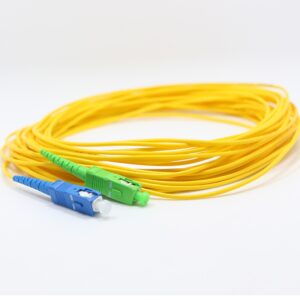
A pre-connected connector is a type of connector that has completed the connection and performance testing of fiber or cable ports before leaving the factory. Unlike traditional connectors, which usually require on-site termination, polishing, and testing, pre-connected connectors simplify installation and reduce the chance of errors.
The core advantages of pre-connected connectors are:
- Plug-and-play: Users can insert the connector into the device and start using it without professional skills.
- Performance consistency: Each connector is strictly tested for optical and mechanical performance before leaving the factory, ensuring stable signal transmission.
- Time-saving: Installation time is significantly reduced, making it ideal for large-scale cabling projects or urgent deployments.
This approach not only simplifies the installation process but also significantly improves the reliability and consistency of the cabling system.
Key Advantages of Pre-connected Connectors
The table below provides a clear comparison between pre-connected connectors and traditional connectors:
| Comparison Aspect | Pre-connected Connector | Traditional Connector |
| Installation Speed | Fast, plug-and-play, no on-site termination required | Requires on-site termination and testing, time-consuming |
| Error Rate | Low, factory-tested, performance consistent | High, prone to errors during on-site operation, may affect the signal |
| Network Reliability | High, stable connection quality | Depends on on-site workmanship, stability varies |
| Maintenance Cost | Low, almost no maintenance required | High, may need regular inspections or re-termination |
| Application Scenarios | Data centers, FTTH, enterprise networks, industrial automation | Traditional cabling projects, small-scale applications |
- Faster Installation
Traditional connectors require stripping the fiber or cable jacket, polishing the end face, precise termination, and testing on-site. Pre-connected connectors, on the other hand, complete all these steps at the factory, so on-site installation only requires plugging them in. For large data centers or urgent network deployments, this can save hours or even days of installation time.
- Lower Error Rate
Manual termination is prone to mistakes, which can lead to signal loss, unstable connections, or even total failure.
Pre-connected connectors are factory-standardized and rigorously tested, ensuring consistent optical performance and greatly reducing the risk of human error, enhancing overall system reliability.
- Higher Network Reliability
Network reliability is critical in data centers, enterprise networks, and industrial automation.
Pre-connected connectors are precisely calibrated and tested, meeting key standards for insertion loss, return loss, and durability. This ensures stable long-term operation and high-quality signal transmission.
- Reduced Maintenance Cost
Traditional connectors require periodic inspection, re-termination, or cleaning to maintain signal quality, increasing long-term operational costs.
Pre-connected connectors require minimal maintenance, reducing on-site labor and maintenance frequency, lowering total operational expenses (OPEX), and improving long-term system efficiency.
Pre-connected Connector Application Scenarios
The advantages of pre-connected connectors make them widely applicable across multiple scenarios:
- Data Centers: In large data centers, thousands of fiber lines need to be installed and managed simultaneously. Pre-connected connectors allow fast installation, reduce on-site construction time, and ensure stable optical performance for each connection, meeting the high-density, high-speed data transmission requirements of modern data centers.
- Fiber to the Home (FTTH): In residential or enterprise fiber access projects, pre-connected connectors significantly simplify the installation process, enabling rapid connection from the service provider network to the end-user. Factory-tested connectors ensure a stable network experience for users and reduce the technical requirements for on-site installation personnel.
- Enterprise Networks: For offices, factories, or campus networks, cabling projects often span multiple floors and rooms. Using pre-connected connectors reduces the complexity of on-site termination and testing, shortens deployment cycles, improves network installation efficiency, and lowers long-term maintenance costs and risks.
- Industrial Automation: In intelligent manufacturing and industrial production lines, devices demand high network reliability and real-time performance. Pre-connected connectors ensure long-term stability and high reliability of fiber connections, even in environments with vibration, high temperature, or interference, supporting efficient operation of industrial automation systems.
Conclusion
Overall, pre-connected connectors offer clear advantages over traditional connectors. They are fast to install and plug-and-play, have a lower error rate, and provide consistent, stable performance, ensuring reliable network operation over time. With the growing demand for fiber optic communication and high-speed networks, pre-connected connectors are increasingly becoming the preferred solution for data centers, enterprise networks, and fiber access systems.
0