目录
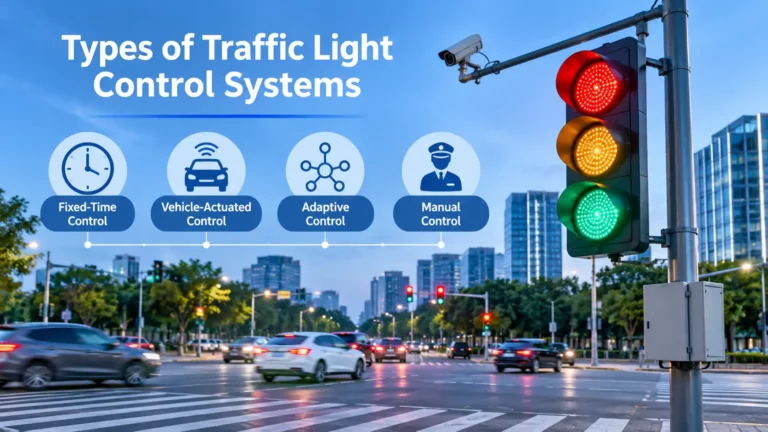
What standards should an aluminum LED traffic signal meet? This depends on where it is installed, local road standards, and project specifications. There is no one-size-fits-all certificate that applies to all markets. EN 12368 may be cited for European projects, while US-based projects may include specifications by the Institute of Transportation Engineers (ITE) and the Manual on Uniform Traffic Control Devices (MUTCD). There are also standards related to enclosure protection and environmental testing.
It is important to know what each of these standards entails when assessing a traffic signal for road applications.
1. What Standards Apply to Aluminum LED Traffic Signals?
The traffic signal requirements include optical, electrical, mechanical, and environmental considerations. But the function of product standards is different from that of road installation guidelines.
1.1 Which Traffic Signal Standards Apply in Different Markets?
The following standards and specifications address different aspects of traffic signal performance and installation.
| Standard or Specification | Main Application | Key Requirements |
| EN 12368 | European traffic signal equipment | Optical, structural, and environmental performance |
| ITE specifications | US traffic signal equipment | Vehicle signal head performance |
| MUTCD | US traffic control devices | Signal placement and road use |
| IEC 60529 | Enclosure protection | Dust and water resistance |
| IEC 60068 series | Environmental testing | Temperature, humidity, and vibration |
EN 12368 focuses on the technical performance of traffic signal equipment. The MUTCD, on the other hand, lays down standards concerning the application of traffic control devices in public roadways. IEC 60529 and IEC 60068 are used to assess certain environmental parameters. Passing one environmental test does not mean that all traffic signal standards are met.
1.2 What Optical and Electrical Requirements Must Be Met?
The traffic lights should give easily recognizable instructions.
• Optical performance: The red, yellow, and green lights should be of chromaticity and luminous intensity distribution complying with applicable standards.
• Dimensions: The commonly used dimensions of the signals are 200 mm and 300 mm. This depends on the prevailing local laws and the design of the intersection.
• Electrical performance: Input voltage, power consumption, insulation, and compatibility with controllers need to be considered.
• Visibility: The engineers need to consider the viewing angles and the distribution of light. Brightness alone does not necessarily mean better visibility.
2. What Performance Tests Apply to Aluminum LED Traffic Signals?
Traffic signals outside experience variations in temperature, humidity, dust, and mechanical wear and tear. The need for testing determines their ability to work effectively under certain parameters.
2.1 How Are Weather Resistance and Housing Protection Tested?
Dust Proofing and Waterproofing
The protection in the enclosure is determined by the IEC 60529 rating. The rating IP65 means that the device is protected against dust and jets of water. But it does not necessarily imply water submersion and corrosion resistance.
Heat Test
Tests for high- and low-heat resistance will determine the performance of LEDs, drivers, and electronics within the temperature range.
Corrosion Tests and Environment Test
Areas prone to sea coast exposure and humidity might cause corrosion of metal parts. Salt spray and damp heat tests can assist here.
2.2 Does Aluminum Housing Affect Compliance and Durability?
The following are some of the performance-related aspects influenced by the aluminum enclosure.
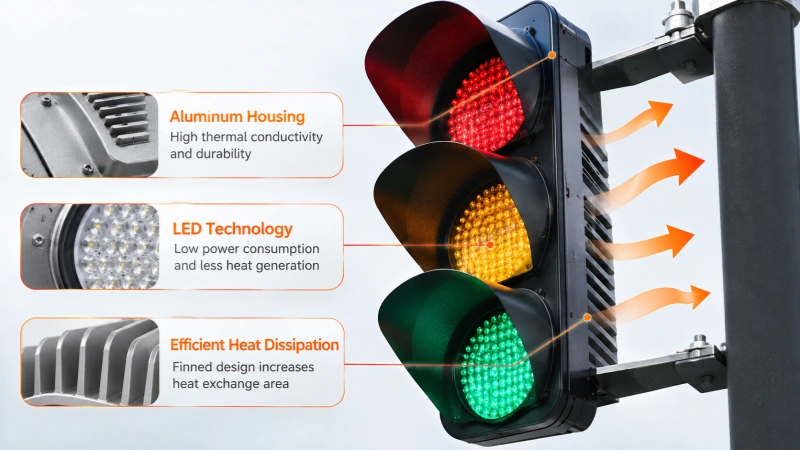
• Heat dispersion: As aluminum has excellent heat conduction capabilities, it assists in dispersing heat from the LED components.
• Strength: There should be enough strength to withstand certain types of mechanical loads on the enclosure, mounting fixtures, and connections.
• Reliability of sealing: There should be reliable seals that protect the connections between lenses, housing, and openings for maintenance.
There is, for instance, the Sinowatcher 300mm Aluminum LED Traffic Signal that has an aluminum case, high-brightness SMD LEDs, IP65 protection class, and front-access module construction. The operating temperature is reported to be in the range from -40°C to +80°C and meets all the criteria of EN 12368. This is the specification information provided by the manufacturer of the given product, not the generic requirements for aluminum traffic signals.
3. How Can You Verify Aluminum LED Traffic Signal Compliance?
A simple number mentioned in the description of the equipment does not prove its suitability. Engineers and procurement officers need to examine other documents to ensure that they refer to the same model of equipment.
3.1 What Documents Should Be Checked Before Installation?
Important documentation is as follows:
• Technical Datasheet: Check dimensions, voltage, power consumption, material of the housing, and operating temperature.
• Test Report: Check the optical performance, enclosure rating, and environmental tests.
• Declaration of Conformity and Certificates: Refer to standards used, version of the standards, product details, and certification body.
• Mounting Information: Refer to mounting and electrical connections.
Various compliance markings should not be considered to be interchangeable. In particular, the CE marking is linked to EU product legislation, while RoHS pertains to restricted substances. Neither is sufficient to establish conformity with EN 12368.
3.2 Why Do Local Project Requirements Still Matter?
While both aluminum LED traffic signals could contain similar components and LED technology, they would have different installation requirements. The local standards may determine the size of the signal, height of mounting, configuration of display, power source, and controller compatibility. While the 300 mm signal could be suitable for some urban intersections, it still needs to be verified according to local requirements.
The environmental factors are also important. Special attention may be paid to protection against corrosion in coastal areas and to equipment that is suitable for the existing temperature variation. Therefore, compliance needs to be evaluated according to the product model, environment of installation, and project documents.
Conclusion
The criteria for aluminum LED traffic signals go beyond the parameters for LED performance. The optical properties, electrical reliability, protection, and environmental resistance are also some of the criteria that must be addressed in the standard. The EN 12368, ITE specifications, MUTCD, and IEC testing standards play different roles and are not substitutes for each other. In choosing the equipment, the engineer has to establish the requirements for the specific local road project and review the technical specifications and testing reports.
0