目录
Installation of crossing aids is a common practice during road upgrades in urban areas. However, cities intending to upgrade their roads often find out that there is no fixed cost of an APS system.
An APS system comprises push buttons, audible guidance systems, installation mounts, wiring, and integration with traffic controllers. The costs of installation and maintenance are also relevant. Knowledge of these costs makes it possible to differentiate the cost of an individual component from that of a complete intersection upgrade.
1. How Much Does an Accessible Pedestrian Signal Typically Cost?
The price for an accessible pedestrian signal will vary depending on the amount of equipment and labor involved. The purchase of one piece of equipment is not the same as upgrading an intersection.
1.1 What Components Are Included in an Accessible Pedestrian Signal System?
APS systems comprise several pieces of equipment that make up the total cost.
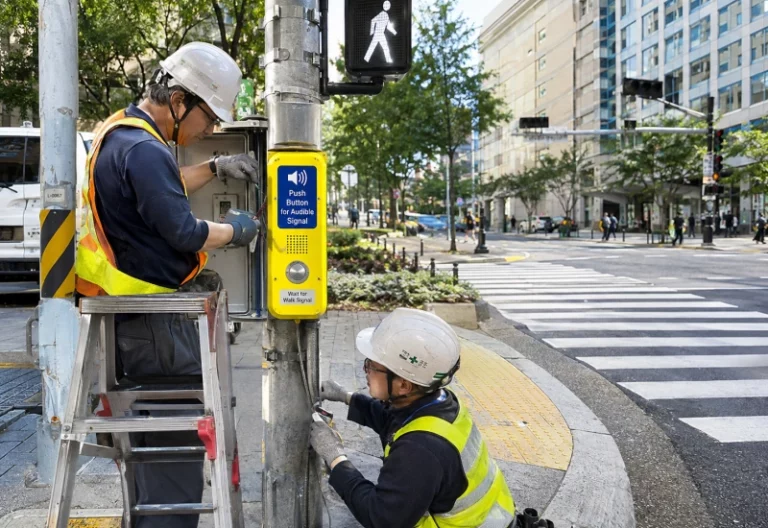
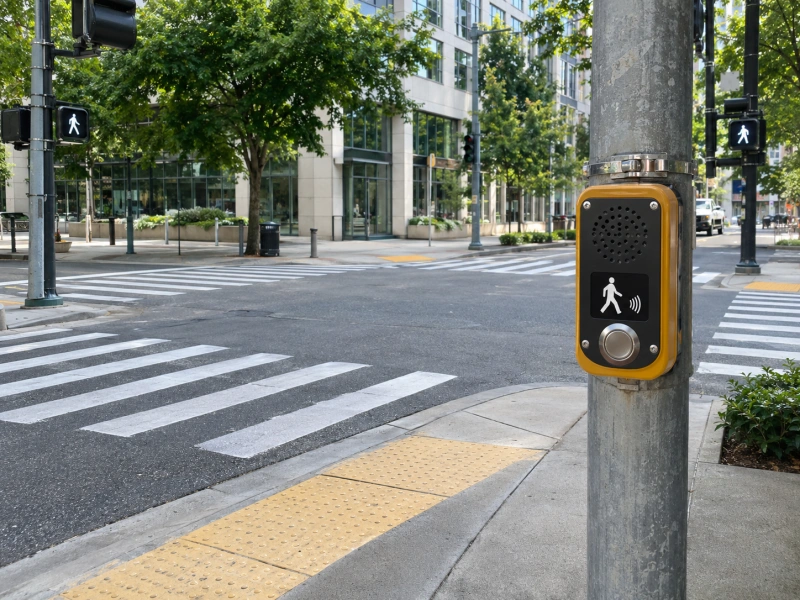
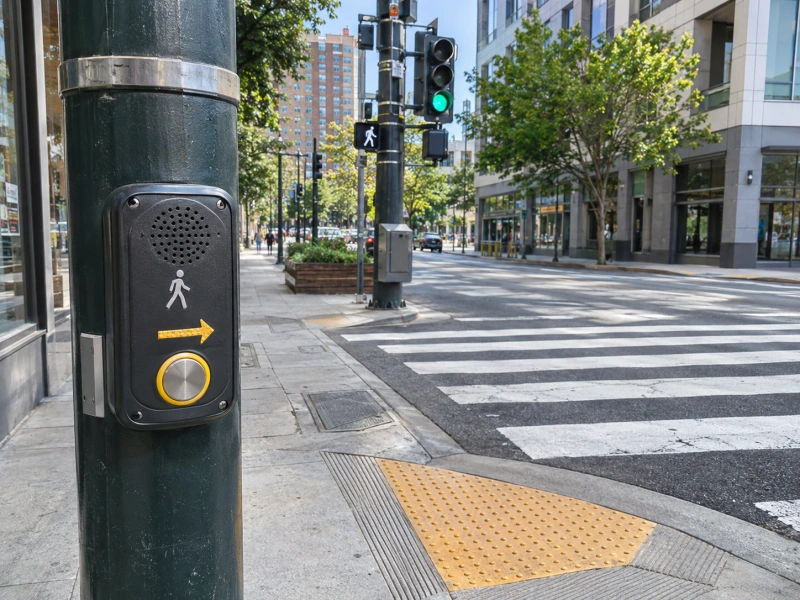
• Accessible Push Buttons: These help pedestrians request a crossing phase. In some cases, push buttons can also have a tactile arrow, a vibrating signal, and an auditory signal.
• Acoustic Guidance Units: Help in providing auditory localization and crossing details. Example – Sinowatcher’s Xentra Acoustic Guidance Unit for Accessible Pedestrian Signal Systems – a pole-mountable unit providing configurable sound output and automatic volume control and suitable for urban crosswalks and intersections. This cost should be taken along with the cost of the equipment needed in a system.
• Traffic Controller Interfaces: Interfaces between APS devices and current traffic signal systems where additional equipment or modifications may be needed when there are no connections in traffic controllers.
• Mounting and Electrical Accessories: Brackets, cables, electrical connections, and accessories to install the equipment. The cost of accessories will vary with the quantity of equipment needed for the installation.
As all this equipment works in synergy, it becomes impractical for the cost of a single piece of equipment to show the whole cost of an APS system.
1.2 What Is the Average Cost of an Accessible Pedestrian Signal?
The average price of APS installation is not universal. All these factors affect the total cost of the project.
Imagine a hypothetical small-scale improvement at an intersection where no major excavations will be made.
| Cost Category | Illustrative Budget (USD) | Included Work |
| APS Equipment and Components | $1,500–$3,500 | Buttons, audible devices, accessories |
| Labor and Electrical Connections | $800–$2,000 | Mounting, wiring, installation |
| Controller Integration and Testing | $500–$1,500 | Interfaces, configuration, testing |
| Illustrative Total | $2,800–$7,000 | Excludes major civil works |
These figures are merely hypothetical examples and have not been checked against actual market averages or supplier quotations. Projects involving installation of new poles, underground cabling, or controller upgrades could be significantly more expensive. In comparing APS pricing, it is essential to know if the quotation includes installation and integration.
2. What Factors Affect the Total Accessible Pedestrian Signal Installation Cost?
The cost of installing a pedestrian accessibility device will certainly depend largely on the characteristics of each intersection in question. Despite utilizing the same APS equipment for both intersections, the final installation cost will surely vary based on various other considerations.
Various factors affecting the cost of installation include:
1. Available Infrastructure
Intersections that have compatible traffic signals, appropriate poles, and electrical connections will require less effort. Old intersections will need replacement of the traffic signal control system, installation of new wires, or modifications, which will increase costs for materials and labor.
2. Equipment Needs
The number of pedestrian crossings, push buttons, audible signals, and other parts of APS will influence the cost of the equipment. There is a possibility that a standard four-way intersection will need a different design than a complex junction or median island crossing.
3. Electrical and Civil Installation
The laying of underground cables, pole base modification, and installation of power connections may lead to increased costs. The costs associated with excavation, repair of pavement, and temporary traffic controls may also be considered installation costs.
4. Labor and Site Access
Labor costs will vary depending on the complexity of installation, wage rates, and work conditions. Projects that require nighttime installations may entail additional labor and traffic control costs.
5. Testing and Commissioning
Once installed, technicians will have to check the functionality of push buttons, signals, synchronizations, and other relevant accessibility requirements. Any modifications to make sure that everything works will further increase the cost of the entire project.
This is one of the reasons why costs of installing APS cannot be estimated based on equipment costs only. It is crucial to conduct an assessment of the location first to understand what has to be done.
Conclusion
However, there is no known cost associated with the installation of the APS. Several things can affect the final cost, which includes the installation of the equipment used, the design of the road intersection, compatibility with the traffic control system, and others. The cost of acquiring the push button or even the audio guidance system will form part of the total cost. It is also important to factor in the electrical installation, testing costs, as well as the maintenance cost in the future.
0