目录
As energy prices continue to rise and environmental awareness grows, more homeowners are considering renewable energy solutions. Among the most popular options are rooftop solar panels, which allow households to generate electricity directly from sunlight. But many people still ask an important question: Are rooftop solar panels really worth it for homeowners? Understanding their benefits, costs, and long-term value can help homeowners make an informed decision.
How Rooftop Solar Panels Work
Rooftop solar panels generate electricity by converting sunlight into usable power through photovoltaic (PV) technology. Each solar panel contains many PV cells, usually made from silicon. Sunlight causes electrons in the cells to move, generating direct current (DC) electricity.
Most household equipment requires alternating current (AC) to function. Therefore, the DC electricity produced by rooftop solar panels must pass through an inverter, which converts it into AC power that can be used throughout the home.
A typical residential solar system usually includes several essential components:
- Solar panels– Mounted on the roof to absorb sunlight and produce electricity. The number of panels depends on the household’s energy needs and available roof space.
- Inverter – Converts DC electricity into AC electricity for everyday home use.
- Mounting system– Secures the panels to the roof and ensures proper positioning for sunlight exposure.
- Monitoring system– Allows homeowners to track electricity generation and system performance in real time.
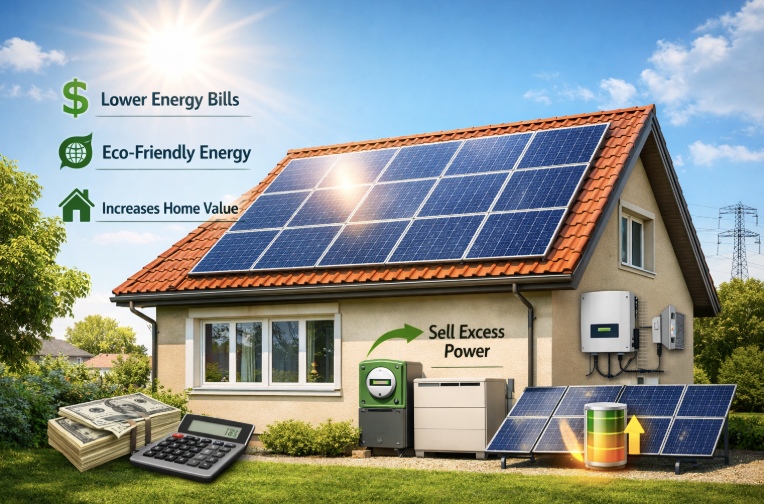
During the day, rooftop solar panels produce electricity that can be used immediately by household appliances. If the system generates more power than the home consumes, the excess electricity may be sent back to the power grid through net metering, depending on local policies. Some systems also include battery storage, allowing extra energy to be stored and used at night or during power outages.
With proper installation and sufficient sunlight, rooftop solar panels can supply a significant portion of a household’s electricity needs, helping reduce reliance on traditional energy sources.
Key Benefits Of Rooftop Solar Panels
Many homeowners invest in rooftop solar panels because of the long-term advantages they offer.
- Lower Electricity Bills
Homeowners can generate their own power through solar energy. This can significantly reduce monthly electricity bills, especially in areas with high energy costs. - Renewable And Environmentally Friendly
Solar energy generates electricity cleanly, with zero greenhouse gas emissions. Installing rooftop solar panelshelps reduce a household’s carbon footprint. - Increased Property Value
Houses with solar systems tend to appeal more to potential buyers. In many markets, houses with solar installations can sell faster and at higher prices. - Energy Independence
Producing power at home helps reduce dependence on the traditional electricity network. When combined with energy storage systems, homeowners can use stored solar power even when sunlight is unavailable.
Cost And Long-Term Savings
The upfront cost of installing rooftop solar panels can be significant. It typically includes equipment, installation, permits, and system design. For many homeowners, the long-term savings make the initial investment worthwhile.
Over time, solar panels can pay for themselves through reduced electricity costs. In addition, many regions offer incentives such as tax credits, rebates, or net metering programs, which further improve the financial return of solar installations.
Most rooftop solar panels are designed to last 25 years or more, making them a durable, long-term energy solution. During their lifespan, homeowners can save a considerable amount on electricity expenses while benefiting from stable energy costs.
Factors To Consider Before Installing
Before installing rooftop solar panels, homeowners should evaluate several factors to ensure the system will perform efficiently:
- Roof condition and available space
- Sunlight availability and any shadows cast by surrounding structures or trees.
- Local electricity rates and potential savings
- Available government incentives or subsidies
- Installation costs and maintenance requirements
A professional solar assessment can help determine whether a home is suitable for solar installation and estimate potential energy production.
Conclusion
For many households, rooftop solar panels are a smart investment. They offer long-term savings on electricity, reduce environmental impact, and may increase property value. Although the initial installation cost can be relatively high, the combination of energy savings and available incentives often makes solar power worthwhile.
As solar technology continues to improve and installation costs gradually decrease, rooftop solar panels are becoming an increasingly practical and sustainable choice for homeowners looking to reduce energy expenses and adopt clean energy solutions.
0