目录
In modern motion control applications, the distinction between an iron core motor and a coreless linear motor is critical for selecting the right solution. The iron core motor relies on a laminated iron core in its rotor or stator, while coreless linear motors eliminate the iron core, creating fundamental differences in performance, structure, and application. Understanding these differences helps engineers optimize speed, precision, efficiency, and overall system reliability in both industrial and high-tech fields.
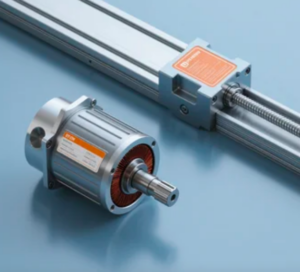
Structural Differences of Iron Core Motor and Coreless Linear Motor
The structural differences between an iron core motor and a coreless linear motor can be summarized in three points:
(1) Iron Core
- Iron Core Motor: Has a solid or laminated iron core that concentrates magnetic flux and provides strong torque.
- Coreless Linear Motor: No iron core; uses moving coils or magnets directly over a magnetic track.
(2) Cogging and Motion
- Iron Core Motor: Iron core causes cogging, leading to vibration and uneven motion.
- Coreless Linear Motor: Eliminates cogging, delivering smoother and more precise motion.
(3) Mass and Responsiveness
- Iron Core Motor: Heavier moving parts increase inertia, limiting acceleration.
- Coreless Linear Motor: Lightweight design allows faster acceleration and better responsiveness.
Performance Differences
- Torque and Force Output
A major distinction between the iron core motor and coreless linear motor lies in torque generation. The iron core design allows high peak force for heavy loads, making it ideal for industrial machinery, assembly lines, and conveyors. Coreless linear motors, while providing smoother and faster movement, generally produce lower maximum force due to the absence of an iron core, which limits magnetic flux concentration. Therefore, for applications where high force or continuous heavy-load operation is required, the iron core motor remains the preferred choice.
- Precision and Speed
Coreless linear motors outperform iron core motors in precision and speed control. Without cogging and with minimal moving mass, they achieve highly accurate positioning, rapid acceleration, and deceleration. This advantage is particularly valuable in high-precision manufacturing, robotics, and optical scanning devices. On the other hand, the iron core motor may struggle in high-speed, high-precision operations because cogging introduces small position errors and vibration, requiring additional control compensation to achieve smooth motion.
- Efficiency and Energy Loss
The iron core motor experiences iron-related losses, such as hysteresis and eddy currents, which reduce efficiency at low loads and increase heat generation. Coreless linear motors avoid these iron losses, resulting in higher efficiency under intermittent or light-load conditions. This difference can be critical for applications that demand both energy efficiency and low maintenance over extended operating periods.
Practical Implications for Motor Selection
When deciding between an iron core motor and a coreless linear motor, engineers must consider multiple factors, including load requirements, speed, precision, and duty cycle. The iron core motor excels in heavy-duty, continuous-load environments where high torque is essential, such as industrial automation, conveyor systems, and electric machinery. Coreless linear motors are ideal for applications demanding smooth, fast, and precise motion, such as robotic arms, laboratory automation equipment, and semiconductor fabrication tools.
Emerging Trends
Technological advancements are bridging the gap between these two motor types. Hybrid systems are being developed that combine the robustness of iron core motors with the smooth, precise motion characteristics of coreless designs. Materials science improvements are also enhancing the performance of iron core motors, reducing cogging and increasing efficiency. At the same time, coreless linear motors are becoming more compact and capable of handling moderate loads, expanding their industrial applicability.
Conclusion
In conclusion, the core differences between an iron core motor and a coreless linear motor are structural design, torque capability, motion smoothness, and energy efficiency. The iron core motor provides high force, robustness, and reliability, while coreless linear motors excel in precision, responsiveness, and low mechanical losses. Understanding these distinctions ensures engineers can select the optimal motor for their specific industrial or high-tech applications, achieving a balance between performance, efficiency, and cost-effectiveness.
0