
目录
A hospital elevator with an accessible design is crucial for helping patients, staff, and visitors move safely and comfortably between floors. Patients with mobility challenges, such as those using wheelchairs or stretchers, rely on elevators to reach treatment areas quickly. Accessible hospital elevators ensure smooth transport, reduce staff effort, and prevent accidents. In busy hospitals, an elevator may make 500–800 trips per week, so accessibility affects efficiency every day.
- What Accessibility Means
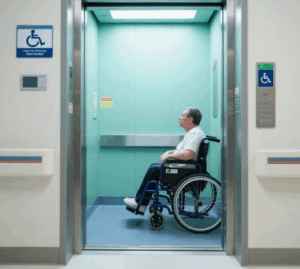
Accessibility in a hospital elevator means having enough space for wheelchairs or stretchers, easy-to-reach buttons, handrails, and doors that open wide and automatically.
- Importance for All Users
Accessible design helps everyone—not just patients. Nurses carrying medical equipment, staff transporting medicines, and visitors with strollers all benefit from well-designed hospital elevators.
I. Patient Safety and Comfort
A hospital elevator with proper accessible features greatly improves safety and comfort. Patients in fragile health need stable, smooth rides to avoid discomfort or injury.
- Preventing Accidents
Non-slip floors, handrails, and smooth doors prevent slips and bumps when moving patients on stretchers or wheelchairs.
- Space for Medical Equipment
Stretchers often carry monitors or IV stands. An accessible hospital elevator should be at least 2.1 meters deep and 1.8 meters wide, allowing staff to move patients and equipment without crowding.
II. Efficiency in Daily Operations
Accessible hospital elevators also help hospitals operate more efficiently. Staff can transport patients quickly, reducing delays and avoiding bottlenecks.
- Faster Patient Transfer
In a five-floor hospital, accessible elevators can save 1–2 minutes per transfer. Over dozens of patients daily, this adds up to significant time savings.
- Reducing Staff Effort
When elevators have enough space and a proper layout, two or more staff members can accompany a patient comfortably, making transport easier and safer.
III. Supporting Visitors and Staff
A hospital elevator benefits visitors and staff, not just patients.
- Comfort for Visitors
Visitors using wheelchairs, walking aids, or carrying heavy items can move safely and comfortably in accessible elevators.
- Helping Staff Work Efficiently
Staff carrying medicines, equipment, or supplies can use accessible elevators without needing extra trips or risking collisions in narrow spaces.
IV. Long-Term Benefits
Accessible hospital elevators provide lasting benefits for hospitals.
- Handling High Traffic
Hospitals often have 3–10 floors, with elevators making hundreds of trips daily. Accessible elevators reduce congestion and keep patient and staff movement smooth.
- Adapting to Different Needs
An accessible elevator can handle patients on stretchers, wheelchair users, staff with equipment, and even visitors with luggage or strollers. Elevators with a load capacity of 1600–2000 kilograms accommodate these needs easily.
V. Conclusion
Accessible design in a hospital elevator is essential for safety, efficiency, and comfort. Spacious cabins, handrails, wide automatic doors, and smooth rides allow patients, staff, and visitors to move easily and safely. Accessible elevators save time, reduce staff effort, prevent accidents, and handle high hospital traffic effectively. They improve the daily operation of hospitals and make it easier to care for patients with mobility challenges. By focusing on accessibility, hhospitals ensure that elevators serve everyone efficiently and safely.
0