目录
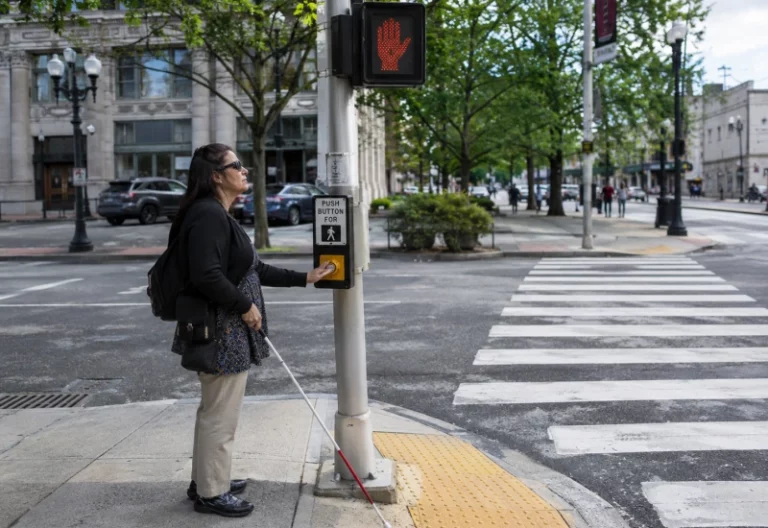
Pedestrian crossing signals might be an element of urban soundscapes that exist in residential intersection areas. However, whereas their beeping might easily merge into the overall soundscape during the daytime, late at night it becomes very irritating. The audible pedestrian crossing helps blind and visually impaired individuals to locate the pedestrian cross-button as well as the WALK lights. It is an important part of accessible transport systems, but loud sounds and improper installation might lead to complaints from the locals.
So, what creates noise pollution? How to get rid of these sounds but keep pedestrian crossings accessible?
1. Why Can an Audible Pedestrian Crossing Become a Noise Nuisance?
An audible pedestrian crossing does not always make a constant noise. Various noises have different functions, and their perceived volume depends on traffic, location, and time of day.
1.1 What Types of Sounds Do Audible Pedestrian Crossings Produce?
Audible crossing devices are commonly incorporated into Accessible Pedestrian Signals (APS), which provide nonvisual traffic information.
The main sound types include:
| Sound Type | Primary Function | Potential Noise Concern |
| Locator Tone | Helps pedestrians find the push button | May repeat regularly |
| Audible WALK Signal | Indicates the pedestrian WALK phase | Occurs during signal cycles |
| Spoken Message | Communicates crossing information | Speech may attract attention |
| Additional Button Message | Provides information after certain button actions | May repeat when activated |
Locating tones and walk signals have different functions. Locator tones assist pedestrians in locating devices and can be run regularly even when there aren’t any pedestrians at all. Walk signals relay the phase of the pedestrian light. That is why citizens get crossing sounds even when there aren’t any pedestrians around. The operation process is not similar in every system.
1.2 Why Are Some Audible Crossing Signals More Disturbing Than Others?
Various aspects influence the degree of annoyance from crossing noises.
• Background noise: In case there is peak-period traffic, it would create traffic noise, which will mask the noise from crossings. However, at night, there won’t be much noise; hence, the same noises will become louder.
• Placement of equipment: If the speakers are located near the windows of residences or reflectors on buildings, the sounds would get louder.
• Repetitive Pattern: The beeps would definitely grab attention even at medium volumes because of their repetitiveness.
• Volume settings: An optimum volume that is useful at peak times would be too loud during other periods.
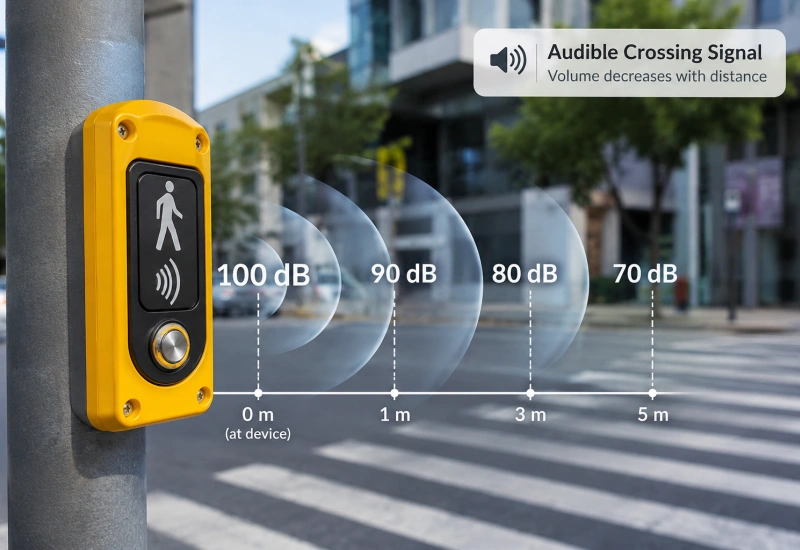
According to the logarithmic scale, an increase in sound pressure level by 10 dB corresponds to an increase in sound intensity by ten times. However, the perceived sound intensity does not increase proportionally. Thus, the assessment of the audible pedestrian crossing consists not only of its loudness but also of many other factors.
2. How Can an Audible Pedestrian Crossing Reduce Noise Without Compromising Accessibility?
It is not intended that such crossing sounds should be eliminated, but rather maintained without generating any additional noise. This can be done through adaptive volume control, proper placement of speakers, and maintenance of the equipment.
2.1 Can Adaptive Volume Control Reduce Audible Pedestrian Crossing Noise?
Adaptive volume control adjusts sound levels according to surrounding traffic noise. When traffic is heavy, the volume increases to keep crossing signals audible. In quieter conditions, it decreases to minimize unnecessary disturbance.
A good example is Sinowatcher’s Xentra Acoustic Guidance Unit for Accessible Pedestrian Signal Systems, a pole-mounted device that provides audible guidance and configurable crossing alerts. It works with Xentra pedestrian push buttons and supports adaptive volume adjustment, with a high-volume range of 50–80 dB and a low-volume setting below 50 dB. These specifications illustrate how crossing signals can adapt to different noise conditions, although the published figures do not specify measurement distances or testing conditions.
Speaker placement is equally important. Signals should be clearly audible to pedestrians without directing excessive noise toward nearby homes. Proper installation and volume settings help balance accessibility with residents’ comfort.
2.2 What Should Cities Consider When Managing Pedestrian Crossing Noise?
The process of effective noise management starts with identifying the actual performance of the system.
1. Measurement of the noise at various times
Noise levels in a city may be measured during daytime, nighttime, and rush hours. As an example, a quiet library may register up to 40 dBA, normal conversation at one meter away from the speaker may amount to 60 dBA, while the level in an urban area may range between 70 and 85 dBA.
2. Equipment placement
Speaker orientation, proximity to windows in homes, and reflection off adjacent buildings may influence exposure levels. The sound output rating of the device does not always reflect the noise level that would be measured in the affected property.
3. Audibility test of the signal
Once the volume is set, it will be prudent for cities to ensure that visually impaired individuals are still able to pinpoint the presence of the pedestrian push button as well as identify the correct WALK signal.
4. Regular inspection of equipment is necessary
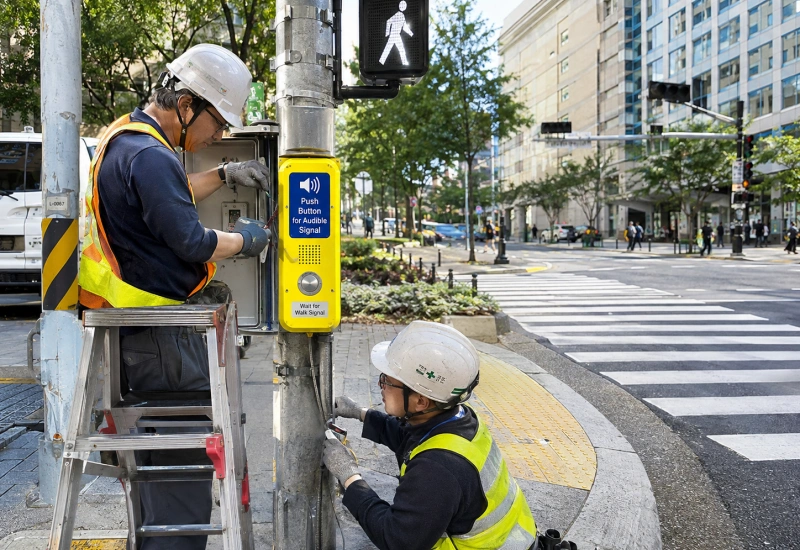
Defective speakers, inappropriate volume settings, or signal control issues can lead to excessive noise levels. Such regular inspections and maintenance will help ensure proper functioning without creating any disturbances. Therefore, noise complaints need to be considered along with the requirements of pedestrians.
Conclusion
An Audible Pedestrian Crossing may be annoying due to its sound in quiet areas where there is poor positioning of loudspeakers or due to unnecessarily high volumes in repeated signals. However, these signals play an important role when it comes to information for pedestrians with disabilities. Proper installation, suitable volume and adequate signals can decrease unnecessary noise and at the same time keep accessibility.
0