目录
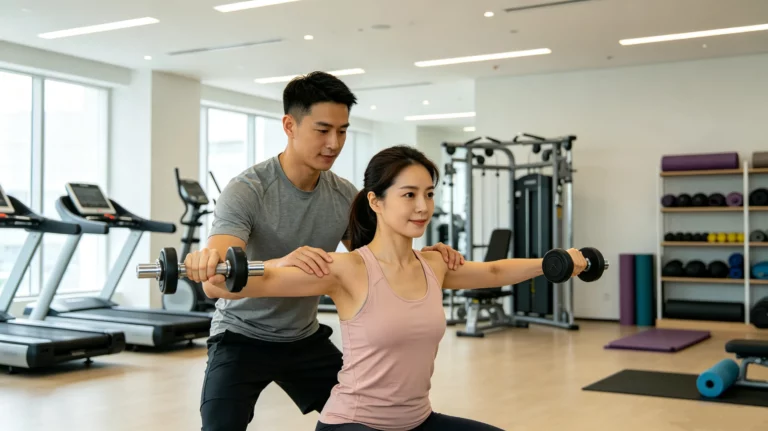
Strong legs help you move about daily, contribute to good balance, and are an essential part of many sports and other forms of exercise. Training the lower body does not need to be part of some sophisticated exercise routine. Compound movements, single-leg movements, and gradual overload will allow you to train all main muscle groups of the lower body while enhancing your coordination and stability.
The right way to do it will vary based on your experience and goals, but even beginners can use bodyweight exercises, while more experienced lifters can start to include resistance in their workouts. The total time that you need to spend working out your legs will take anywhere from 30 to 60 minutes.
What Are the Best Exercises for Building Stronger Legs?
Certain exercises are particularly helpful because they work several muscles of the lower body simultaneously. Instead of focusing on one particular motion, combining several can be beneficial.
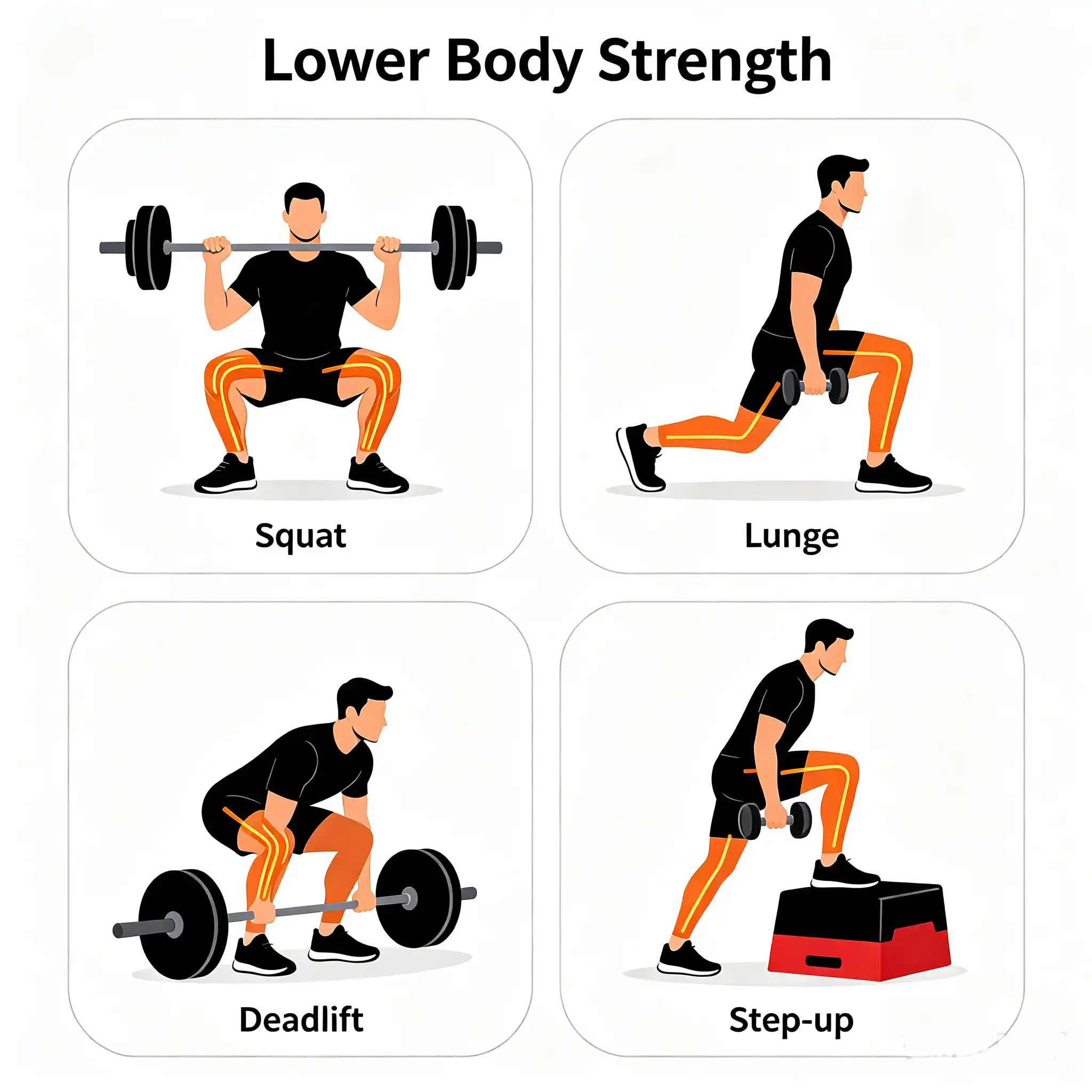
Squats for Overall Lower-Body Strength
Squats are considered one of the most effective exercises to build strong legs because they engage the quadriceps, glutes, and hamstrings, as well as require stability provided by the core muscles. At the same time, squats teach a movement pattern required when sitting, standing, lifting, and climbing. A beginner can try bodyweight squats and progress towards goblet squats or barbell variations of the exercise. More control matters rather than increasing the load immediately. The suggested number of sets and repetitions is 2-4 sets of 8-15 repetitions, respectively.
Key points include:
- Keep your feet stable throughout the movement.
- Lower your body under control.
- Keep your chest and spine in a comfortable neutral position.
- Push through the floor to return to the starting position.
Lunges for Balance and Single-Leg Strength
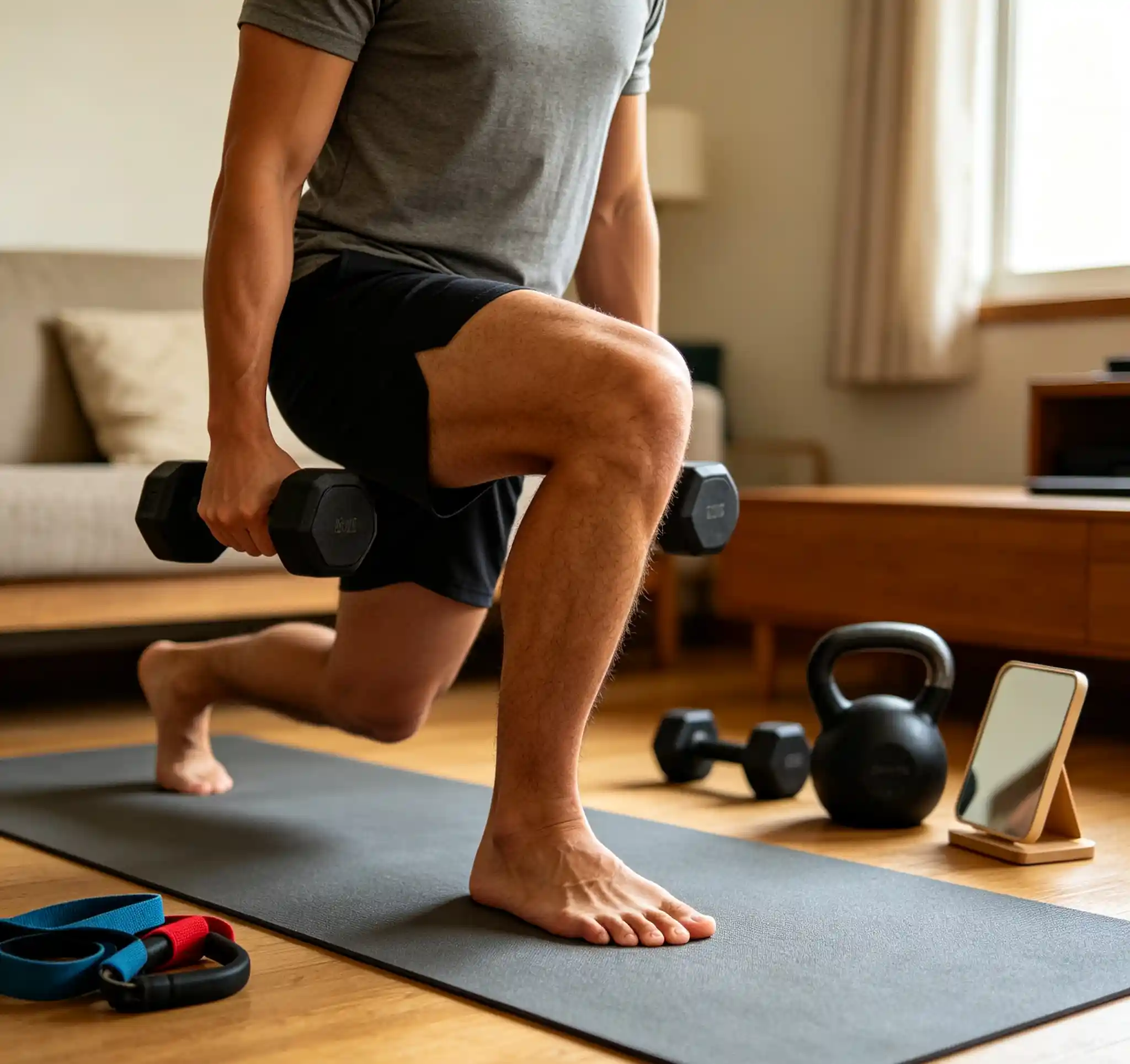
Lunges are more challenging and involve working each leg separately, which makes this exercise helpful for building strength, balance, and coordination. Forward, reverse, and walking lunges engage the quadriceps and glutes and require more control than most two-leg exercises. Reverse lunges can serve as a good introductory exercise because stepping backwards may be an easier motion to control. Beginners can perform 8-12 repetitions per leg for 2-3 sets and add dumbbells later.
Single-leg exercises may also provide information about whether there is an imbalance in strength from one side to another. Moving through repetitions at a controlled pace helps ensure that the two legs are working equally without one taking all the weight off the other.
Deadlifts for the Hamstrings and Glutes
Deadlifts incorporate the hip-hinge technique and have a lot of emphasis on the posterior chain muscles like the hamstrings and glutes. Additionally, they work the back and core muscles, which makes them an excellent compound exercise for strength building.
This exercise should begin with a balanced position and a controlled hip hinge as opposed to pulling the weight with the upper body. Beginners should learn the movement with a light load or even a bodyweight hinge before progressing. A common starting point is 3 sets of 5–10 repetitions, with enough resistance to maintain good technique throughout every repetition.
Step-Ups for Functional Leg Power
Step-ups are simple yet effective in building leg muscles by challenging balance and coordination. In addition, this exercise simulates daily activities like stepping up onto stairs and is a great functional exercise to do. Make sure the platform is high enough so you do not lean excessively or rotate. As your strength progresses, you can add some dumbbells for additional load.
How Can You Make Leg Exercises More Effective?
Selecting exercises is just the beginning of the leg strength-building process. The quality of training, amount of resistance, and progress depend on how well your body adapts.
Using Bodyweight Before Adding Weights
The simplest way to start training is using your own weight since it does not require any equipment and allows getting used to proper technique. Squats, lunges, step-ups, and glute bridges can all be done without adding external loads. At first, it is better to concentrate on:
- Consistent technique
- Controlled repetitions
- A comfortable range of motion
- Stable balance
- Full control during both lifting and lowering
Once an exercise becomes relatively easy, resistance can be increased gradually.
Increasing Resistance and Training Volume
Muscle training requires an appropriate training stimulus. Progressive overload means a gradual increase in the difficulty of workouts rather than constant repetition of the same exercises. Progression can involve:
| Method | Example |
| Add resistance | Increase a dumbbell from 10 to 12 lb |
| Add repetitions | Progress from 8 to 10 reps |
| Add sets | Increase from 2 to 3 sets |
| Improve control | Use a slower lowering phase |
| Increase difficulty | Move from bodyweight to weighted exercises |
No more than one variable has to change at once. A gradual increase is usually much easier than drastic changes in the training process.
Combining Compound and Isolation Exercises
Training several muscle groups at once is a characteristic of compound exercises like squats and deadlifts. But there are still some isolation exercises that can be used to get extra work for certain areas. Possible combinations can include:
- Squats for lower body development
- Deadlifts for posterior chain muscles
- Lunges for single-leg control
- Calf raises for the lower legs
This combination covers different movement patterns without requiring an excessive number of exercises.
How Should You Build a Stronger Legs Workout?
A proper workout must contain enough stimulus without excessive recovery efforts. A simple routine is always preferable for beginners rather than a complex one that includes many different exercises.
How Many Sets and Repetitions Should You Do?
The proper amount of sets and repetitions varies from exercise to exercise and from training goals. For general strength development, a useful starting range is 2–4 sets per exercise. Movements that are compound can involve lower amounts of repetitions with greater resistance; meanwhile, other exercises require smaller weights and higher repetition counts. A beginner would begin with 8 to 12 repetitions, and for experienced individuals, different repetition ranges could be used based on the training program. Repetitions should be difficult but performed with proper form.
How Often Should You Train Your Legs?
For most individuals, two leg training sessions per week would be a good balance of training and recovery. For a beginner, only one leg training session can be enough at first, and then it can be increased as the body adjusts to the exercise. It is not necessary to train legs intensely every day. Legs get stronger during recovery from training sessions.
How Much Rest Do Your Legs Need?
Rest is a key component of strength training. As a rule of thumb, leaving about 48 hours between two strenuous workouts targeting the same muscles is a good idea. Within each workout, rest intervals can also be adjusted depending on the intensity of the exercises done. It is possible to take 1–3 minutes of rest between sets for most strength exercises, with easier exercises requiring shorter rest times.
Such aspects as sleep, diet, hydration, and activity level are other factors that will affect recovery. In case of declining performance and increased fatigue of muscles, reducing the volume of training sessions might be beneficial.
Conclusion
There is no single exercise that should be used for building strong legs. For example, squats will develop general lower body strength, lunges will help in mastering balance in a one-leg position, deadlifts will work the muscles of the lower back, hamstrings, and glutes, and step-ups will train functional strength and balance. To get the best results, start with a manageable weight, pay attention to technique, and increase the challenge during training over time. Once a week or twice a week of such training is a good option to start.
0