目录
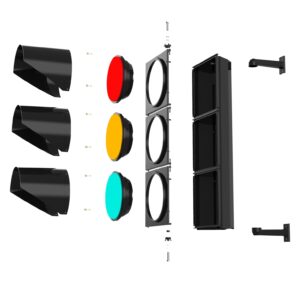
Urban roads are under constant pressure from rising traffic volumes. Managing this demand efficiently requires precision and timing — and that’s where the traffic signal timer plays a key role.
Coordinated Timing Between Intersections
One of the most effective methods for reducing congestion is signal coordination — the synchronization of multiple traffic signal timers along a route.
- When timers are linked in a sequence, vehicles can pass through several green lights without frequent stopping.
- This “green wave” effect keeps cars moving steadily, particularly during rush hours.
- It reduces start-and-stop driving, improving average travel speed and minimizing exhaust emissions.
Coordinated timing is widely used in busy commercial districts and urban corridors to maintain consistent traffic movement.
Adaptive Control and Real-Time Adjustment
Modern traffic signal timers use data from sensors, cameras, or radar systems to adapt to changing road conditions.
During off-peak hours, timers shorten signal cycles to prevent drivers from waiting unnecessarily at empty intersections. This real-time flexibility is one of the greatest advantages of smart traffic systems.
Prioritizing Public Transport and Emergency Vehicles
Congestion often worsens when buses or emergency vehicles get trapped in traffic. Intelligent traffic signal timers can assign priority to these vehicles, giving them green lights as they approach intersections.
By doing so, public transport remains on schedule, and emergency response times are shortened.
This selective timing not only reduces congestion for others by clearing the road faster but also improves service reliability and public satisfaction.
Managing Pedestrian and Non-Motorized Traffic
Traffic management is not just about cars. A traffic signal timer also coordinates pedestrians and cyclists.
When crossing times are misaligned with vehicle signals, intersections can become clogged by pedestrians stuck mid-crossing or cyclists merging at the wrong moment.
Timers that balance all users — by giving enough time for safe pedestrian movement — reduce such interruptions, keeping flow steady and intersections safer.
Using Data Analytics to Refine Signal Performance
Many modern cities collect traffic data through connected traffic signal timers. The data is analyzed to detect recurring congestion patterns and fine-tune signal timing.
- Analytics tools can suggest new timing sequences based on average speed, vehicle count, and waiting duration.
- City planners can simulate different timing strategies to identify the most efficient setup.
- Over time, machine learning algorithms continuously improve timing efficiency, adapting to new patterns such as seasonal or event-based traffic spikes.
By applying data-driven control, cities ensure that every second at an intersection is used effectively.
Reducing Fuel Waste and Emissions
Constant braking and acceleration waste fuel and increase emissions. By improving traffic rhythm, a traffic signal timer helps create smoother driving conditions.
When vehicles spend less time idling at red lights, fuel consumption drops noticeably.
On a larger scale, this contributes to better air quality in urban areas and supports sustainability goals — a growing priority in modern traffic planning.
The Human Factor: Less Stress, More Predictability
A well-functioning traffic signal timer not only improves efficiency but also reduces driver stress. Predictable signal patterns help drivers plan maneuvers calmly instead of reacting impulsively.
When intersections feel orderly, road rage and risky lane changes decrease. Drivers, cyclists, and pedestrians all share a more cooperative rhythm, which indirectly reduces congestion caused by human error.
Conclusion
Traffic signal timers, through coordinated, adaptive control and data-driven optimization, can ensure smooth traffic flow, reduce delays, and create a safer, greener, and quieter urban environment.
0