目录
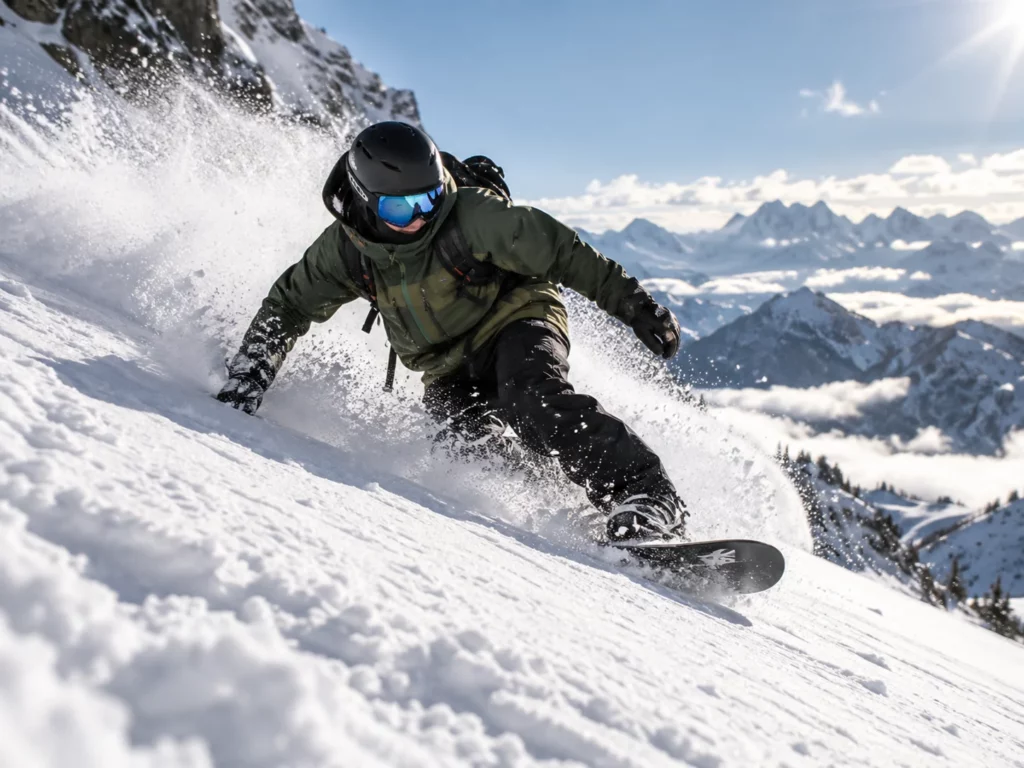
Getting ready for the first experience at the ski resort can be rather frightening. With a board, bindings, boots, a helmet, goggles, snow clothing, and other protective gear, an inexperienced person might find it difficult to distinguish what is necessary.
It is not necessary to buy an expensive set before going for the first time. Snowboard equipment must meet three major requirements for beginners – control, safety, and warmth. The control requirement includes a board, bindings, and boots; a helmet and goggles are needed to provide safety; clothing is required for warmth and protection.
Being a beginner, it is much more important to know the purpose of the equipment and to have the right sizes rather than buying high-quality equipment.
1. What Snowboarding Gear for Beginners Is Essential?
Snowboarding equipment for beginners falls into three main types. These are riding gear, protective gear, and clothing.
| Gear | Main Purpose | Beginner Tip |
| Snowboard | Riding and turning | Renting is fine at first |
| Bindings | Connect boots to the board | Match them to boot size |
| Snowboard boots | Support and control | Prioritize proper fit |
| Helmet | Head protection | Strongly recommended |
| Goggles | Eye protection and visibility | Choose lenses for conditions |
| Jacket and snow pants | Windproof and snowproof clothing | Use water-resistant material |
| Gloves/mittens | Hand protection | Waterproofing matters |
| Base layer | Moisture management | Avoid cotton |
| Snowboard socks | Warmth and comfort | One good pair is enough |
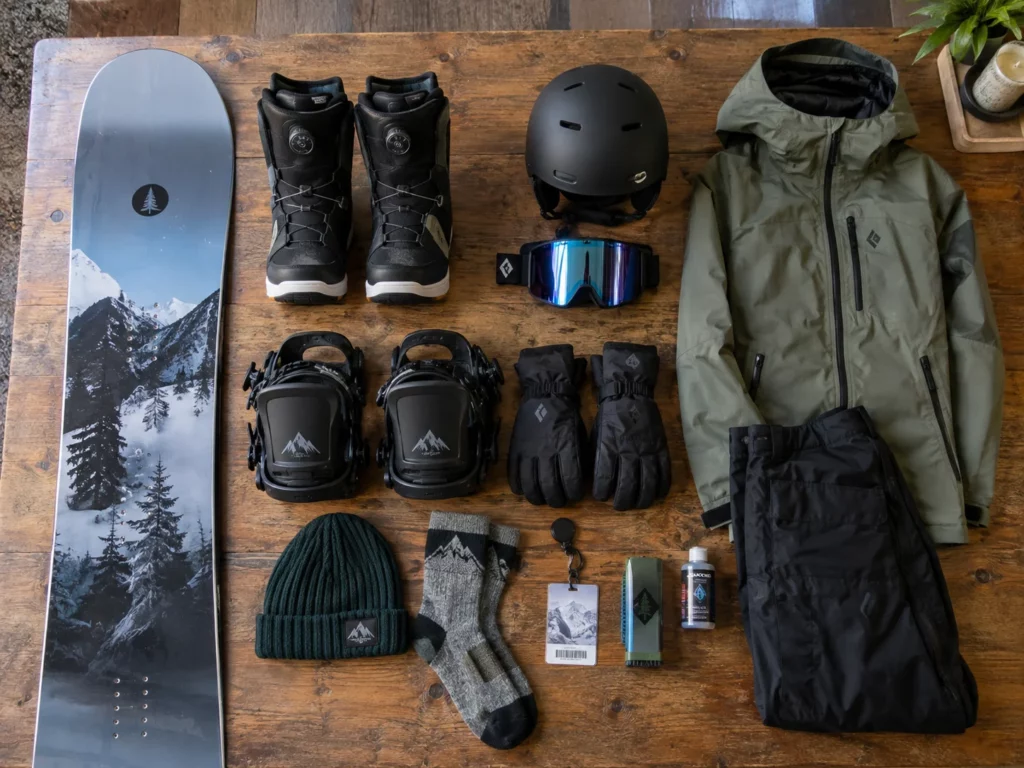
Start With the Snowboard, Bindings, and Boots
The snowboard is just one component of the system. The board, bindings, and boots must all work together.
The beginner rider would find it beneficial to get a snowboard with soft or moderate flex. Soft boards can be bent and controlled easily at low speed, making it simpler to learn to do the basic maneuvers.
Boot fitting also needs to be considered. The heel needs to stay relatively stable, whereas the toes should be able to lightly rest against the front without being painfully squeezed.
Big boots are not necessarily a good idea just because they are comfy when purchasing. Liners of boots compress over time; thus, big boots could give you even less control.
A Helmet and Goggles Are More Than Accessories
A properly fitted helmet should not shift in position when worn and should feel stable without any movement from side to side and forward and backward.
Goggles offer protection against wind, snow, glare, and UV rays. One criterion that you should check is the VLT, or the visible light transmission.
In general:
• Goggles with lower VLT are more appropriate for bright conditions.
• Goggles with higher VLT are more appropriate for cloudier and snowy conditions.
• There is no perfect lens for all weather conditions.
Dress in Layers
Donning more clothes does not automatically equate to feeling more comfortable. Three-layer clothing is normally more efficient.
The base layer handles the moisture, the mid layer keeps you warm, and the outer layer shields you from wind and snow.
There are some jackets and pants that are rated at 10,000 mm waterproof / 10,000 g breathable, for instance. Such figures can help in fabric comparison, though the choice of comfort depends on weather and physical activity as well.
For base layers, there are synthetic fabrics and merino wool, while cotton is less desirable due to its moisture absorption and long drying time.
2. How Do You Choose the Right Beginner Snowboarding Gear Size?
Correct sizing directly affects comfort and board control. For beginners, proper fit is usually more important than brand or appearance.
Snowboard Length Depends on More Than Height
The traditional method of standing a snowboard upright and checking whether it reaches somewhere around the chin or nose can provide a rough reference, but it should not be the only sizing method.
Consider:
• Body weight
• Height
• Boot size
• Skill level
• Riding style
For instance, two riders can have the same height of 175 cm, but one can weigh 60 kg and the other 85 kg. This can make them require different board lengths or stiffness.
This is the reason why one should begin by considering the recommended weight range of the manufacturer.
Board Width Should Match Your Boots
If a snowboard is not wide enough compared to one’s boots, one’s toes or heels can stick out past the side of the board too much.
For a rider with large feet, a wider snowboard would be necessary.
Here’s an effective sequence of selecting snowboard gear:
Boot size → Binding size → Snowboard width
First, select your boots, and choose bindings based on that. Then check if your whole setup is compatible with the snowboard.
Check Binding and Boot Compatibility
The sizes may have S, M, or L letters, but the sizing is different from manufacturer to manufacturer. The boot size range of that particular company should always be considered.
After the installation of the bindings, the boots must fit well in them. They shouldn’t be too short or too long.
When fitting them for the first time, the proper size for the snowboard, bindings, and boots can be determined at a snowboard shop.
3. Snowboarding Gear Checklist: What to Pack Before You Go
Before going to the mountain, follow this easy checklist to ensure you don’t forget something important.
Riding and Safety Gear
Bring or rent:
• Snowboard
• Bindings
• Snowboard boots
• Helmet
• Goggles
• Wrist guards or impact shorts, if needed
Beginners tend to fall more often while learning. Wrist guards, knee protection, or impact shorts may provide additional protection, although no protective equipment can eliminate injury risk.
Snowboarding Clothing
Pack:
• Base layer
• Mid layer
• Waterproof jacket
• Snow pants
• Snowboard socks
• Waterproof gloves or mittens
One properly fitted pair of snowboard socks is usually enough. Wearing two thick pairs can make your boots too tight and reduce comfort.
Small Essentials
Do not forget:
• SPF 30+ sunscreen
• Lip balm
• Water
• Small snacks
• Phone
• ID
• Lift pass
• Hand warmers
It is essential to protect yourself from the sun even in the winter season because the snow is likely to reflect light and increase ultraviolet rays that can damage your skin.
If you have gone to learn how to snowboard only for 1-3 days, renting the equipment instead of buying it might be a good idea.
4.Conclusion
The most costly snowboarding equipment is not required at all by beginners. What they require is the right-fitting snowboarding equipment that will offer protection to the user as well as comfort.
Begin with compatible boots, bindings, and a snowboard, followed by a good helmet and goggles, along with appropriate layered clothing. Renting major equipment before your first journey could be beneficial in terms of cost and avoiding mistakes.
With improved skills, you may get new equipment according to your growth.