目录
In most instances, people tend to focus on minimizing carbohydrate intake, avoiding fats in their meals, or even replacing all their meals with salads. It may assist one in losing calories daily; however, it does not imply that one is going to eat healthy meals every day.
When taking a weight-loss meal, there are some factors that need to be considered, which include taking adequate amounts of protein and other nutrients, having adequate energy, being satisfied, and consuming the required daily amount of calories.
Rather than trying to find out which foods burn fat in the body, it is essential to understand the proper balance of your meals.
1. What Makes a Balanced Meal for Weight Loss?
A Calorie Deficit Still Matters
In essence, weight loss relies on energy balance, whereby when the body expends more energy than it gets from intake, a deficit occurs.
For instance, when a person maintains his/her body weight at approximately 2,200 calories per day but takes an average of 1,850 calories per day, then the calorie deficit of calories would be approximately 350 calories per day.
It is just an example, since there are other considerations in calculating the number of calories needed, like age, body size, muscle mass, and so forth.
Deficit of calories does not necessarily mean eating the least amount possible. The reason is that excessive restrictions lead to increased appetite and decreased training abilities.
Include the Four Main Components
As far as the components that should be included in the creation of a healthy balance diet are concerned, they would include the following:
Protein + High-Fiber Carbohydrates + Vegetables + Fats
The list of the food products falling under the category of proteins includes chicken, fish, eggs, Greek yogurt, meat, tofu, and beans. As for the food products with high-fiber carbohydrates, they include oats, potatoes, brown rice, grains, beans, and fruits. The list of food products containing fats includes nuts, seeds, avocados, olive oil, and fish.
The functions of these components are specific in nature. They include the following: maintaining healthy muscles, feeling full, providing energy, and supporting body functioning.
Prioritize Protein and Fiber
It is important that proteins play their vital role when one loses weight and works out. In relation to various workouts and individual requirements, daily protein intake of physically active people may vary from 1.2 to 2.0 grams per kilogram of body weight.
This way, in the case of a 70 kg person, this means daily consumption of 84 to 140 grams of protein.
Dietary fiber is another constituent necessary to keep the required balance. The daily requirement may consist of 25 to 30 grams of fiber.
2. How Should You Build a Weight Loss Plate?
Try a Simple Plate Method
You do not need to weigh every ingredient to build a reasonable meal. A visual plate method can make portion control easier.
| Plate Section | Approximate Share | Examples |
| Vegetables | 50% | Broccoli, spinach, tomatoes |
| Protein | 25% | Chicken, fish, eggs, tofu |
| High-Fiber Carbs | 25% | Brown rice, potatoes, quinoa |
| Healthy Fats | Small portion | Nuts, avocado, olive oil |
This is not a strict formula. It is simply a practical starting point that can be adjusted according to your body size, activity level, and goals.
Remember That Healthy Foods Still Have Calories
High-nutrition foods do not have zero calories.
The main macronutrients contribute varying levels of energy:
• Protein:about 4 kcal per gram
• Carbohydrates:about 4 kcal per gram
• Fat:about 9 kcal per gram
This particular point needs to be taken into consideration while preparing or processing the following foods: nuts, avocado, peanut butter, and oil. For instance, one tablespoon of olive oil equals 15 ml and has 120 calories; by using 2 additional tablespoons, the total calorie content rises.
What Does a Balanced Meal Look Like?
The combinations don’t necessarily have to be very complex.
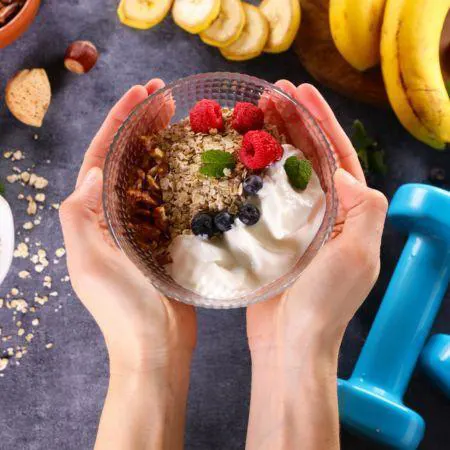
Greek yogurt + oats + berries + nuts will give you a good combination of proteins, carbohydrates, fiber, and fats in one sitting.
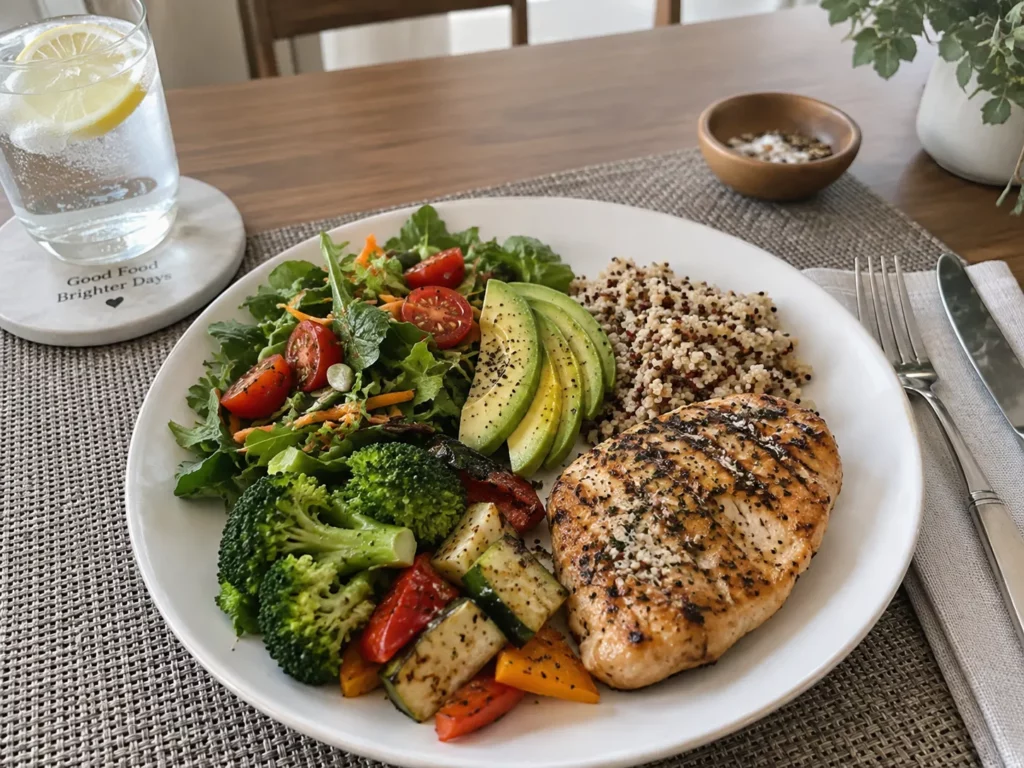
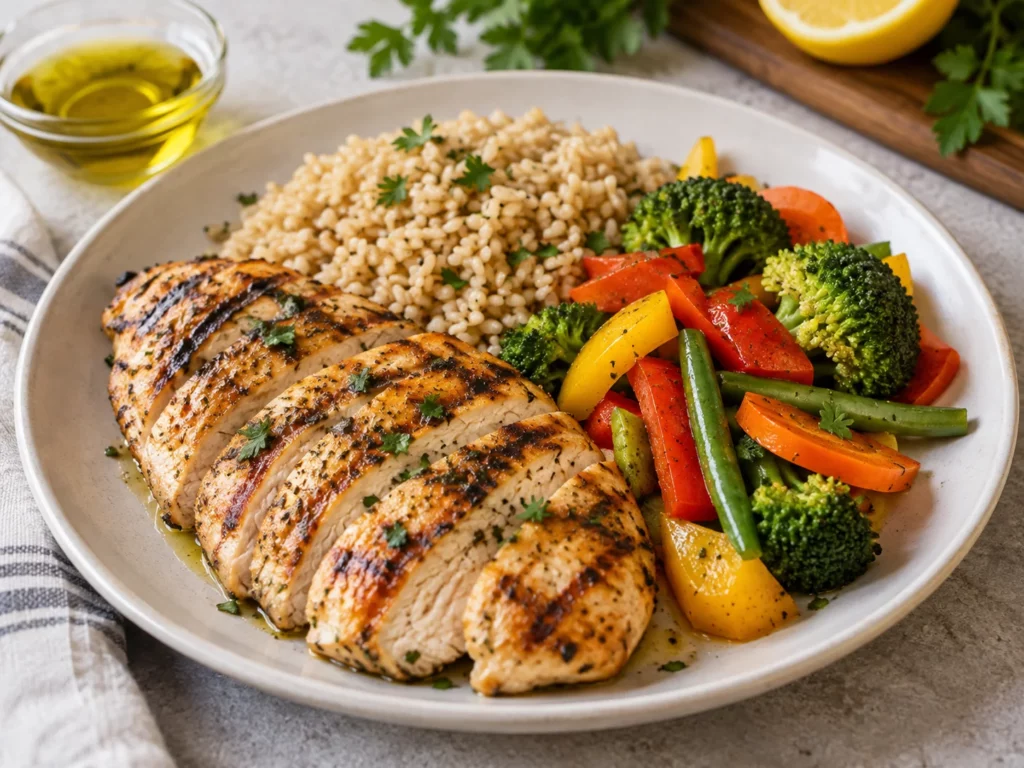
Grilled chicken + brown rice + vegetables + a little olive oil may work for lunch.
Salmon + potatoes + broccoli gives you protein, carbohydrates, vegetables, and naturally occurring fats in one dish.
If you’re a vegetarian, tofu, lentils, and beans will give you your protein.
It’s more about knowing the logic behind it rather than having to stick to one menu.
3. Common Balanced Meal for Weight Loss Mistakes
Removing Carbs from Your Diet
Not all the time must carbohydrate intake be reduced for anyone who is dieting for weight loss.
One does not have to avoid carbohydrates from sources like rice, potatoes, oats, fruits, and other grains. This is highly essential, especially for people who jog and cycle.
Ignoring Hidden Calories
Sometimes the main meal is not the problem. Extra calories may come from foods and drinks that are easy to overlook, including:
• Cooking oils
• Salad dressings
• Sauces
• Sugary coffee
• Juice
• Alcohol
• Snacks
These foods do not always need to be eliminated, but they should be considered when evaluating overall calorie intake.
Confusing “Low Calorie” With “Balanced”
A salad composed of lettuce, cucumber, and tomato may have low calorie content; however, this doesn’t imply that the salad is balanced.
In the absence of protein, carbohydrates, and fats in the diet, it becomes difficult for the food to suppress your appetite.
The main purpose of cooking diets for weight loss is not to make the diet with the lowest number of calories.
Losing Portion Control on Weekends
Weekly patterns are important.
When you cut your calories by 300 per day, Monday to Friday, that’s:
300 × 5 = 1,500 calories
But an overindulgent weekend dieting pattern will wipe out those extra calories you burned during the week.
It’s better to be consistent throughout the week than to diet perfectly for five days and then abandon the effort on weekends.
4. Balanced Meals for Weight Loss Should Be Sustainable
A weight loss plate may consist of the following:
Vegetables: ½; Proteins: ¼; High fiber carbs: ¼; Fats: In small amounts.
The diet does not rely on limiting food consumption, but on controlling food quantity and ensuring sufficient intake of proteins, fiber, and nutrients.
The ideal weight loss meal will cater to all your requirements and meet the calorie goals.