目录
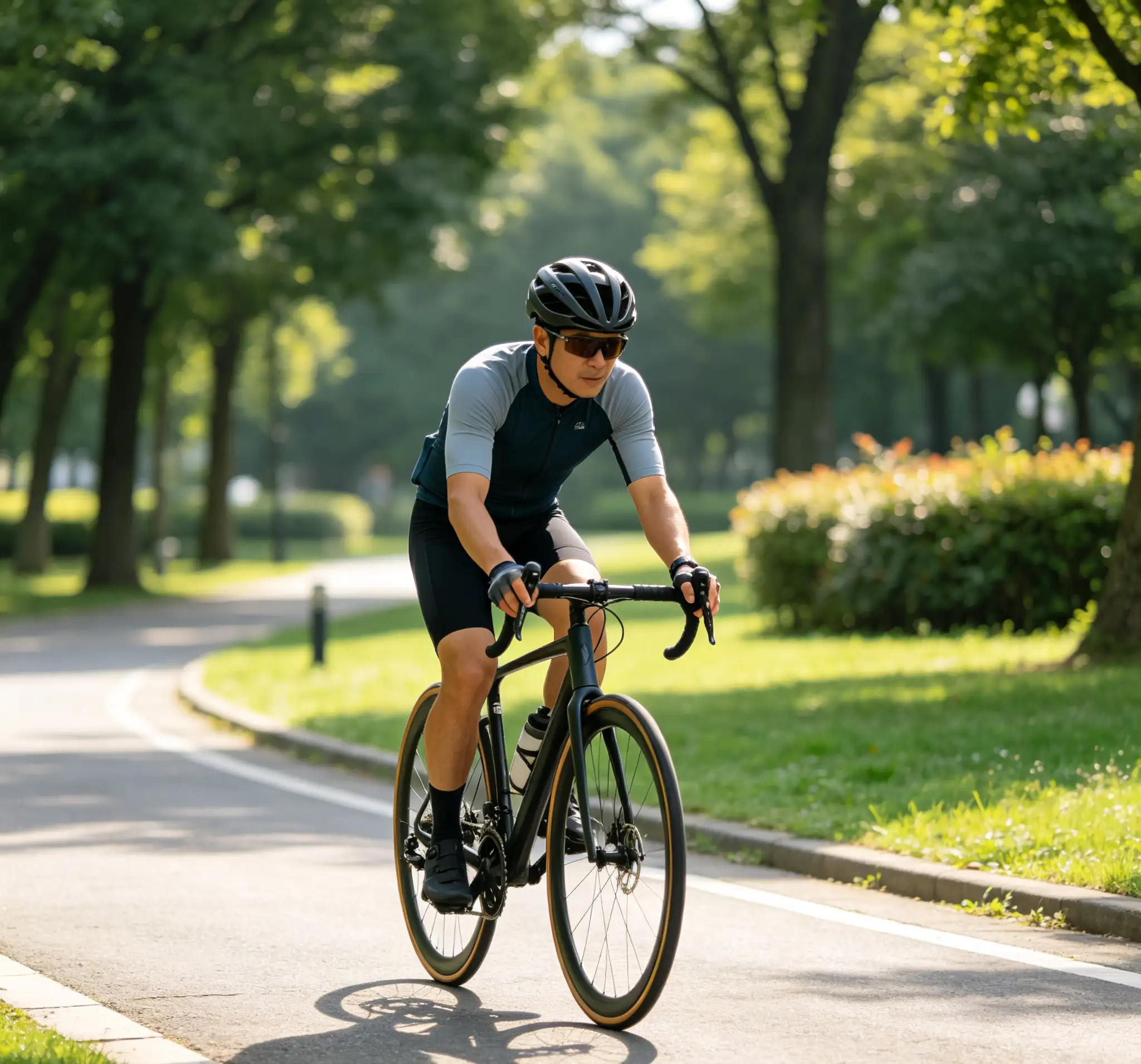
Cycling is one of the cardiovascular workouts that are useful for burning calories and increasing stamina, as well as strengthening the muscles of the lower part of the body. When people aim to reduce their body fat located around the belly area, cycling is considered a helpful activity that should be included in the program for weight management. Nevertheless, people cannot target their belly fat through cycling.
The amount of fat loss depends on some other factors, including the time a person spends riding a bike, how intense the efforts are, how often a person rides a bike, the person’s diet, sleeping habits, etc. By means of cycling, a person can get rid of extra fat and get slimmer.
1. Can Cycling Help Reduce Belly Fat?
How Cycling Burns Calories
This workout requires big muscles, which involve the muscles of the thighs, hamstrings, buttocks, and legs. These muscles require quite a large amount of calories while cycling. The amount of calories burnt depends on parameters such as body weight, speed, surface, resistance, and duration of the workout. Hence, a person weighing about 70 kg will burn 200-300 calories while cycling at medium speed within half an hour; at a higher speed, more calories will be burnt. Below are some determinants of caloric burn during cycling:
- Body weight: Heavier individuals generally expend more energy during the same activity.
- Intensity: Faster speeds and higher resistance increase energy requirements.
- Duration: Longer sessions create greater total energy expenditure.
- Terrain: Hills and uneven routes usually require more effort than flat roads.
Therefore, cycling helps to burn fat because it increases energy consumption during the week.
Why You Cannot Target Belly Fat Directly
It is impossible to burn fat only in the abdomen with cycling. Fat storage places and its sources during the need for extra energy depend on genetics, hormones, age, gender, and other aspects of the body structure. Some people can start losing weight at the waistline quite quickly, whereas others lose fat in their face, legs, arms, or hips first.
Thus, long-term workouts do not necessarily mean that a person will start to burn fat in his/her stomach first. It is more realistic to decrease overall body fat than to expect the reduction of the amount of fat in a certain area.
2. What Type of Cycling Is Best for Losing Belly Fat?
Steady-State Cycling for Longer Workouts
The steady-state cycling method consists of a constant effort during an extended period of time. The technique works especially well for beginners, as the intensity can be controlled, which means that the session will be less tiring. A beginner will begin with 30-45 minutes of moderate cycling and then try to get up to 45-60 minutes of cycling, and more experienced people will train for 60-90 minutes.
The exercise should be done at a moderate intensity, where you need to breathe faster than usual while being able to talk in short sentences. With such an exercise, endurance will be increased, and calorie burning will be intensified, thus making it useful for training.
Interval Cycling for Higher Intensity
Interval cycling includes alternating hard efforts with recovery periods. As an example of interval training, we could use 30 seconds of intense cycling and 90 seconds of easy cycling and repeat this cycle many times. An example for a beginner can be like that:
| Stage | Duration | Effort |
| Warm-up | 10 min | Easy |
| Fast interval | 30 sec | Hard |
| Recovery | 90 sec | Easy |
| Repeat | 6–8 rounds | Variable |
| Cool-down | 5–10 min | Easy |
Intervals can make workouts more intense, but at the same time impose higher loads on the cardiovascular and muscular systems. Therefore, beginners should develop their fitness foundation before doing many high-intensity workouts.
Outdoor Cycling vs. Indoor Cycling
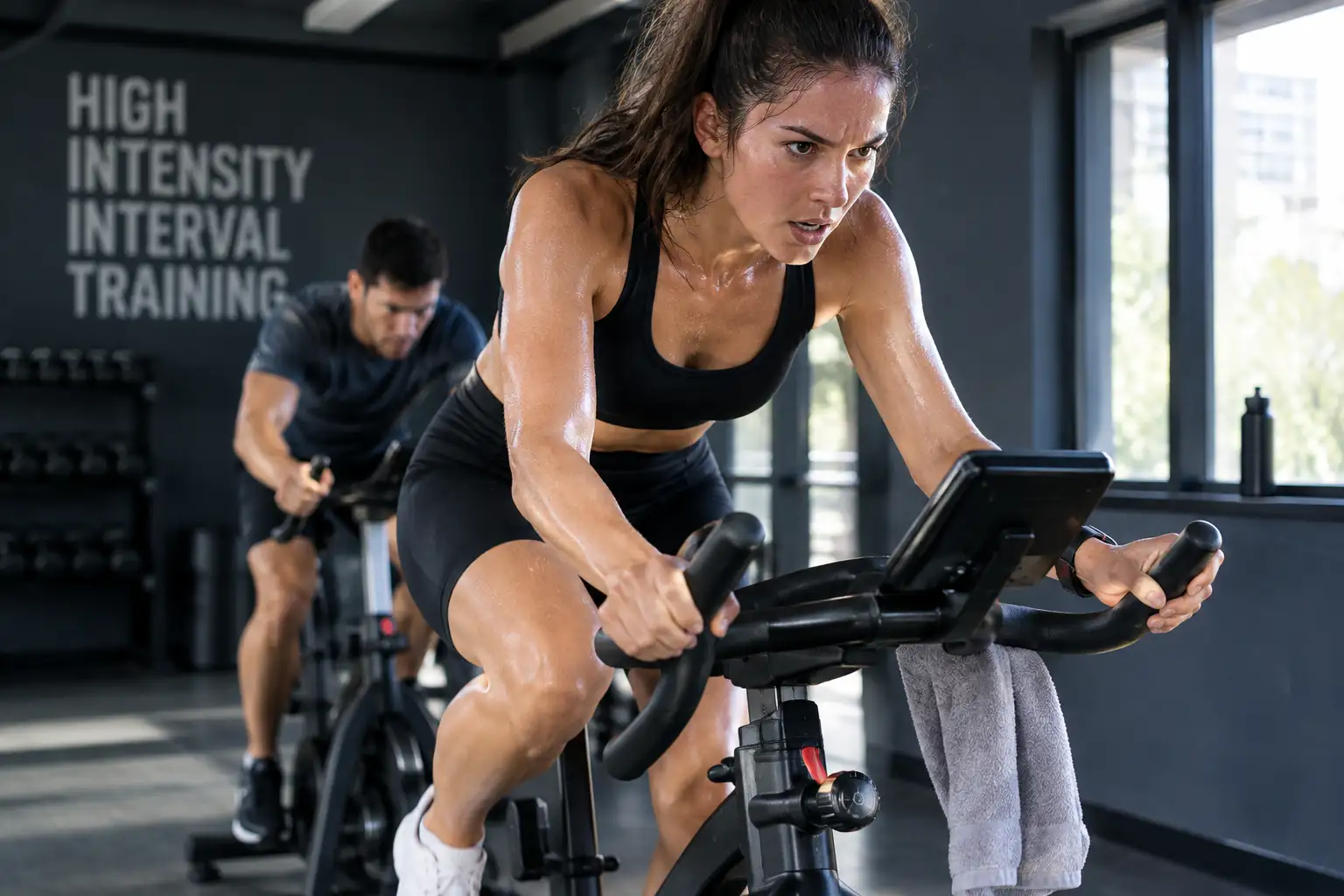
Cycling both outdoors and indoors is beneficial for fat burning; yet, taking into account personal tastes and the availability of opportunities, one can find the environment that would suit him/her best. Cycling outdoors gives variation in terrain and resistance as well as options for recreational riding; indoor cycling gives control over resistance and intensity.
It may not be possible to go out due to weather and other circumstances. Instead of choosing one kind of physical activity based on its caloric expenditure, beginners should think about the format that would help them get used to the process of exercising regularly.
3. How Should You Cycle to Lose Belly Fat?
How Long and How Often Should You Cycle?
Training frequency has a major effect on total weekly activity. A practical starting point for beginners is 3–4 cycling sessions per week, with each session lasting approximately 30–60 minutes. A weekly schedule could include:
- 2 moderate cycling sessions of 40–60 minutes
- 1 shorter interval session of 20–30 minutes
- 1 optional easy ride for recovery and additional activity
It is important to get a balance of endurance and intensity without having all workouts be intense. As one’s fitness level increases, it will be possible to change either duration or frequency.
How to Control Cycling Intensity
Heart rate can provide a more objective way to monitor exercise intensity. A commonly used estimate for maximum heart rate is 220 minus age, although this formula is only a general reference and can vary considerably between individuals. For moderate aerobic exercise, many people can begin around 50–70% of estimated maximum heart rate, while more demanding intervals may temporarily reach a higher range.
Perceived exertion is another useful method for managing intensity. If one were to rank their effort from 1–10, a moderate cycling session would equate to 5–6 on this scale, whereas an intense interval would be between 7 and 8. Cyclists who are just starting need to concentrate on the technique of cycling and effort control as opposed to continuous training.
How to Gradually Increase Training Volume
Rapid increase in the volume of cycling can result in overtraining, sore muscles, fatigue, or other kinds of injuries. This type of progression enables the body to adjust to higher levels of activity. Thus, an athlete doing 90 minutes of workouts in the first week can increase this figure to 100–105 minutes in the second week. Another option is to add 5–10 minutes to one or two existing sessions. Progress can come from several variables:
- Increase workout duration.
- Add one easy weekly session.
- Introduce moderate hills or resistance.
- Gradually add short intervals.
- Maintain easier recovery days.
Proper nutrition should correspond to training. If the cyclist eats enough protein, vegetables, whole-food carbohydrates, and healthy fats, he/she will recover well and will keep energy in check. Sleep is also important for this reason.
Conclusion
Well, then, can cycling help burn belly fat? Cycling can definitely aid in fat burning that is required for the reduction of belly fat, but it cannot target fat deposits around the stomach in particular. The most evident effects of cycling result from energy expenditure, development of cardiovascular endurance, and regularity of workouts. If a person has just begun doing sports, three or four cycling workouts per week for 30 to 60 minutes would be sufficient. With the help of intervals, strength training, diet, and progression, much better results can be achieved.
0