目录
Your first camping experience should be an adventure rather than a stressful one. However, novices tend to pay excessive attention to equipping themselves and very little attention to the new environment.
At home, having a chilly night, dying phone, and lack of food is a small nuisance. In the wild, the same things may influence your comfort and well-being significantly. Proper preparation involves answering some simple questions such as where you will sleep, how cold it will get, if there is enough water, and what will happen if the weather conditions change.
Being prepared is more important than being equipped when it comes to the success of novices’ camping.
1. What Should Beginners Prepare Before Outdoor Camping?
Start With an Easy Campsite
If this is going to be your first camping experience, make sure you opt for a developed campground as opposed to camping in the backcountry.
Camping in the car is ideal for novices since they will have enough equipment and easy access to shelter in case the weather turns out bad.
It’s always wise to ensure you have booked a place before setting out and that you know the regulations concerning fires, pets, wildlife, etc.
Check More Than the Daytime Temperature
A forecast of 75°F (24°C) during the afternoon may sound comfortable, but nighttime temperatures could fall to 46–50°F (8–10°C).
Before camping, check:
- Daytime highs and nighttime lows
- Rain and thunderstorm forecasts
- Wind conditions
- Fire restrictions or wildfire alerts
- Sunrise and sunset times
For a first trip, try to arrive at least two hours before sunset. Setting up a tent and organizing your campsite is much easier in daylight.
Test Your Gear Before Leaving
It is not appropriate to set up your tent for the first time right on your camping site.
Make sure that everything from the poles, stakes, guylines, and rainflys are included, as well as checking the headlamp, lantern, stove, and power bank.
A simple equipment test done in your home will save you from frustrating hours out there.
2. What Camping for Beginners Gear Do You Really Need?
Focus on Six Basic Needs
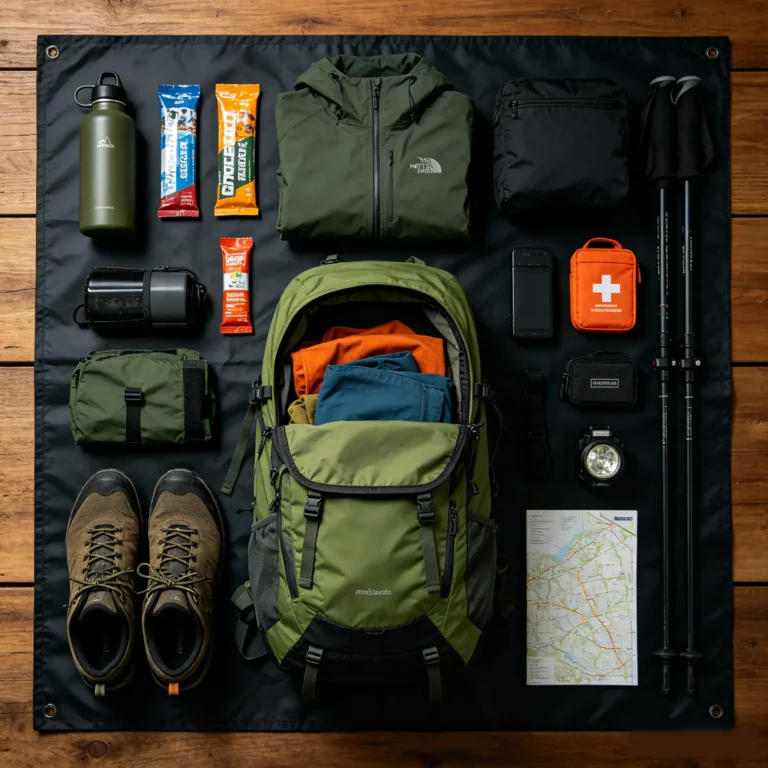
A beginner camping checklist does not need dozens of gadgets. Start with six priorities: shelter, sleep, water, food, clothing, and safety.
| Category | Basic Camping Gear | Purpose |
| Shelter | Tent, rainfly, groundsheet | Weather protection |
| Sleep | Sleeping bag, sleeping pad | Warmth and insulation |
| Water | Bottles, water container | Drinking and cooking |
| Food | Stove, cookware, meals | Energy and nutrition |
| Lighting | Headlamp, lantern | Night visibility |
| Safety | First-aid kit, map, power bank | Emergency preparation |
Choose a Tent for Space, Not Just Headcount
The phrase “2-person tent” normally means sleeping capacity and not comfort.
In case two persons are camping in cars as well as have camping equipment in the backpack, the 3-person tent will be more comfortable for them. The other aspects that should be considered include ventilation, rain protection, wind protection, and ease of setting up the tent.
In case of wind, the function of the stakes and guylines is as important as that of the tent itself.
Do You Really Need a Sleeping Pad?
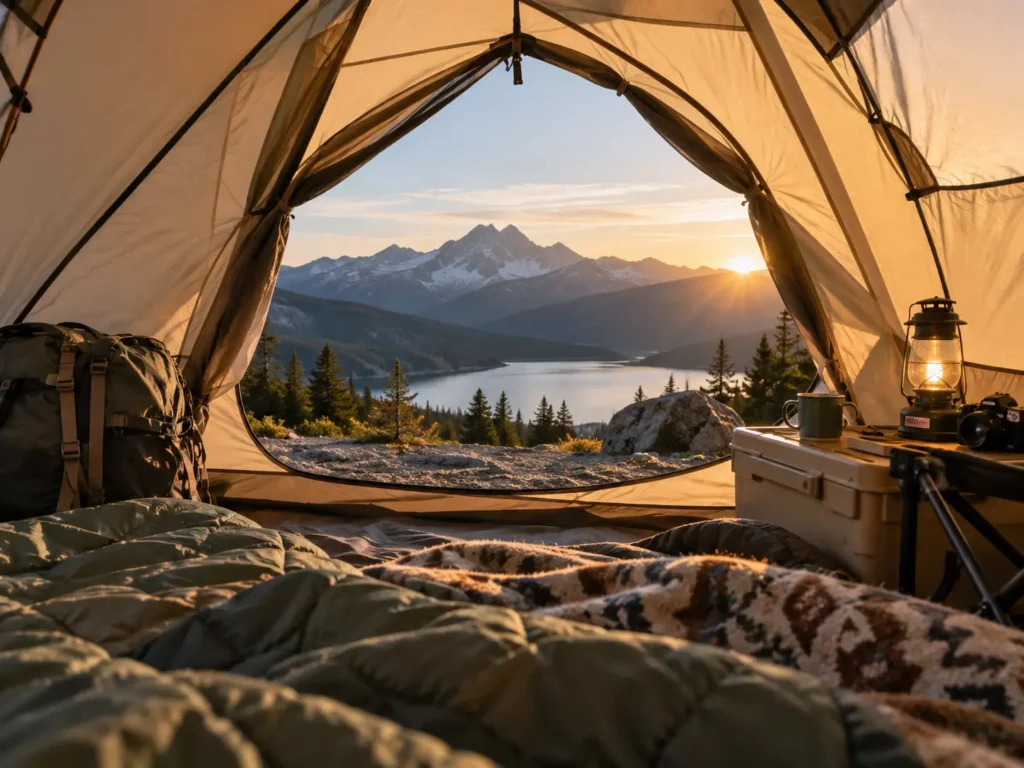
Yes, it is. A sleeping pad is not merely a bed that can be carried around.
During your sleep on the cold surface, your body loses heat through conduction. Meanwhile, the insulation value of the insulator below a compressed sleeping bag is minimized; thus, a sleeping pad functions as a barrier to prevent heat loss.
Typically, all sleeping pads have an R-value denoting their insulation value. The higher the R-value, the more the heat retention ability.
How Much Water Should You Bring?
Under normal circumstances, 2 to 3 liters of water per person per day can be considered as a rule of thumb.
For instance:
2 people x 2 days x 3 liters = 12 liters
This estimation takes no account of water needed for cooking and cleaning purposes.
One must never take it for granted that the clear water in the river or lake is drinkable.
3. What Camping Safety Rules Should Beginners Know?
Do Not Depend Entirely on Your Phone
Mobile coverage can go out of reach instantly in the outdoors.
Map your destination prior to venturing and mark your campsite and parking spot. Let someone outside your trip know where you are headed and when you plan on coming back.
Your phone is helpful, but it should not be your sole backup plan.
Store Food Correctly
The safety of food at campsites does not just mean keeping food fresh. Foods, wastes, and items with smell tend to attract wildlife.
Storage depends on where one is camping. There are some campsites that offer wildlife-proof lockers; in other cases, there could be need for bear-resistant containers.
It’s important always to adhere to the regulation of your camping site and not to generalize anything.
Never Use Combustion Stoves in an Enclosed Tent
A camping stove and other fuel-burning appliances can pose risks of fires and carbon monoxide (CO) poisoning.
This gas is particularly risky due to its being colorless and odorless. Consequently, fuel-burning appliances must be used as per the manufacturers’ guidelines in properly ventilated surroundings and not near flammable items.
Carry a Useful First-Aid Kit
A basic first-aid kit may contain:
- Adhesive bandages
- Sterile gauze and bandages
- Antiseptic supplies
- Disposable gloves
- Tweezers
- Personal medications
Supply carrying is one of the many aspects of emergency planning. For beginners, it is important to know where the nearest health facilities are located and how to evacuate the camp site quickly in case of a storm, fire, injury, or other emergencies.
Avoid Common Beginner Camping Mistakes
Little things usually cause big issues. Typical examples would be arriving at night, forgetting dry clothes, depending completely on a cell phone for directions, preparing very complex food, and using a sleeping bag that does not suit the temperature at night.
The best approach to avoiding these issues is making a list and reviewing it before departure.
4. Camping for Beginners: Preparation Matters More Than More Gear
You do not need expensive gear for your first camping trip. What matters most is knowing where you will sleep, how cold it may get, whether you have enough water, how food will be stored, and what to do if the weather changes or an emergency occurs.
Start with a simple overnight trip at an established campground. As you gain experience, you will quickly learn which items are essential and which ones you can leave at home.
With proper planning, suitable equipment, and basic safety awareness, beginners can enjoy camping comfortably and confidently.
0