目录
Walking tends to get ignored because of its simplicity, but it should be noted that simplicity does not mean inefficiency. Walking can help to burn extra energy daily, improve cardio capacity, and create a calorie deficit in combination with proper nutrition. Also, unlike very intense exercises, walking is quite easy to incorporate into your commuting, shopping, breaks, and leisure time activities.
The main benefit of walking for beginners is its regularity. An adequate walking routine can be done quite often without any special equipment or physical training skills. But weight can only be lost through walking. There are many factors affecting walking efficiency, including speed, time spent walking, body weight, terrain, nutrition, sleep, and physical activity.
How Does Walking Help You Lose Weight?
Walking Increases Calorie Expenditure
The reason for weight loss while walking lies in increased energy expenditure. The more walking time and its intensity increase, the higher the amount of energy expenditure will be; however, there are other variables affecting energy expenditure, including body weight, walking pace, distance, terrain, and metabolism. For example, a person weighing around 70 kg (154 pounds) burns 230-300 calories per hour of walking.
As an example, walking 40 minutes at a moderate speed 5 days a week can burn 750-1,000 calories a week. While this may not be enough for weight loss, regular physical activity can make a difference in terms of forming an energy deficit through appropriate food consumption. The walks may also add extra movement, such as climbing stairs or walking to places, which will help increase energy consumption without any special training sessions.
Walking Supports a Calorie Deficit
Weight loss usually happens when energy consumption exceeds the energy received from food. In this case, the term “calorie deficit” is used. Walking contributes to developing such a deficit since walking increases energy expenditure. However, one should not believe that walking will help to lose weight on its own. For instance, a 300-calorie walk can be nullified by the food consumed afterwards. This means that physical activity should be combined with proper nutrition.
A balanced approach seems to work better. Rather than aiming to create a huge deficit, one can walk and eat a balanced amount of nutrient-rich foods. This will help to keep energy levels high while slowly shedding weight. Walking is useful when people want to maintain their weight after losing some of it. After reaching the necessary weight, a person can use exercise to sustain a certain energy balance and avoid any decrease in the level of physical activity.
Walking Can Be Easy to Maintain
One of the main advantages of walking when trying to maintain weight is its ease of access. A lot of other types of exercises require special equipment, training, or special conditions, whereas walking does not. It can also be divided into shorter sessions. People who do not have enough time to do an hour-long exercise can walk several times per day, for instance, three 15- to 20-minute walks a day.
Walking is great for people who spend most of their day sitting. As an alternative to sitting, one can substitute it by engaging in light physical activities and thus become more active without turning their whole day into a physical workout routine. The recovery aspect is also important when it comes to walking. Light-impact workouts like walking do not put too much stress on joints and muscles, unlike high-impact sports. Nevertheless, anyone suffering from joint pain needs to be careful about it.
How Much Walking Do You Need to Lose Weight?
Set a Realistic Daily Step Goal
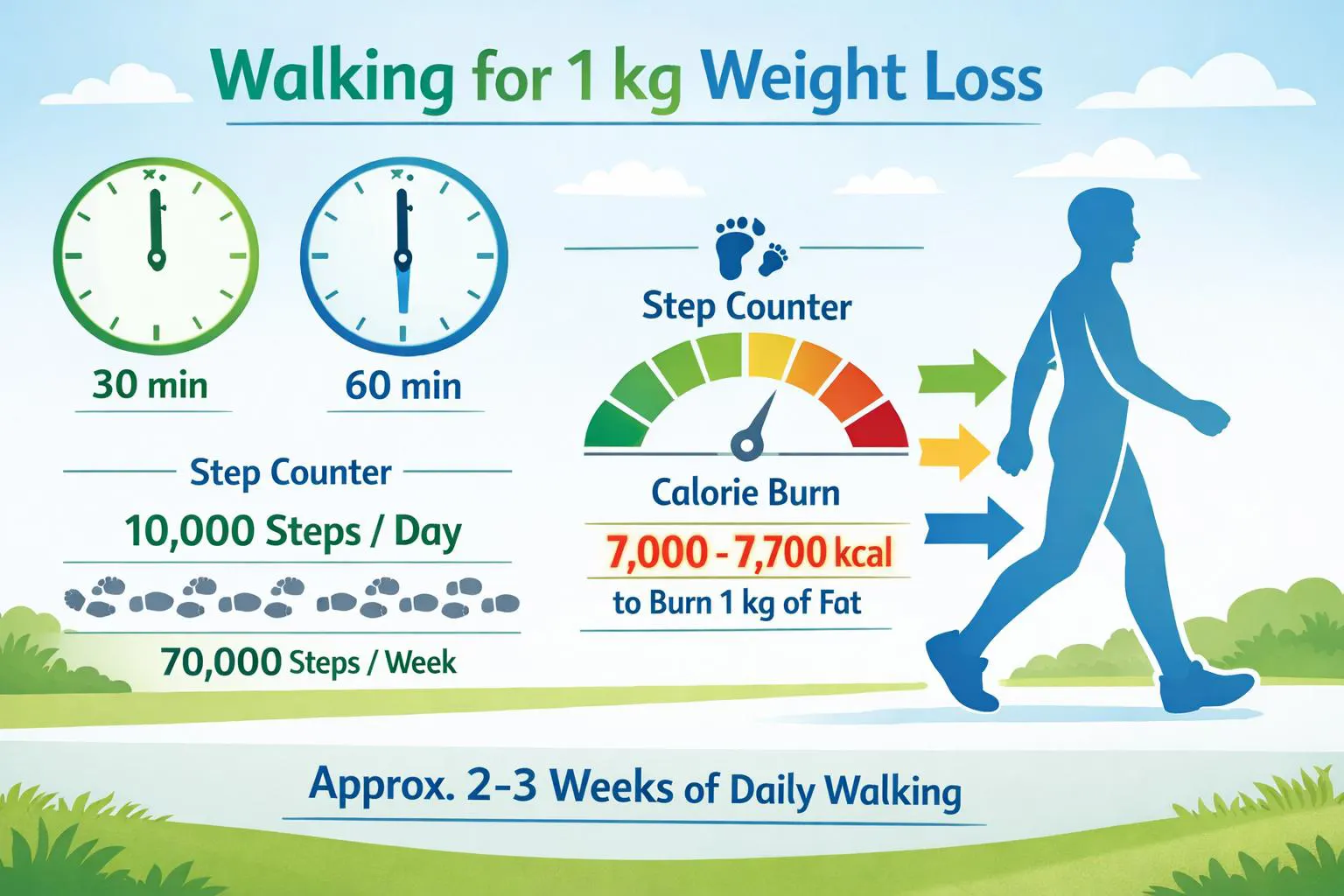
There is no magic number of steps that would ensure that you lose weight. Although 10,000 is the popular goal, there is no need to take this figure as a must. A better starting point is to consider current activity. For example, if one averages 4,000 steps a day, one should start with 5,000-6,000 steps first before increasing it to 10,000. Once that level becomes comfortable, the target can gradually increase.
| Daily Walking Level | Practical Approach |
| 4,000–6,000 steps | Suitable starting range for a sedentary routine |
| 6,000–8,000 steps | Moderate increase in daily movement |
| 8,000–10,000+ steps | Higher activity level when comfortable |
Such ranges are not medical guidelines but practical recommendations based on individual needs, age, physical condition, work-related activity, etc.
Increase Walking Time and Intensity
The extent of the physical activity and its intensity determine how many calories you burn while walking. The 30-minute leisurely walk does not involve as much physical work as the 30-minute fast walking that results in higher breathing and heart rates. You should begin with the 20-30 minute walk and then gradually extend the length of the walk to 45-60 minutes if you have the time.
You do not have to always exhaust yourself. Sometimes it is more efficient to perform moderate and repeatable effort instead of occasional strenuous walks. It is easier to continue a certain exercise if the body gets used to a progressive increase in work.
Stay Consistent With Your Routine
Consistency is more valuable than attempting to walk a great distance in a day. It will be easier for you to walk 30-45 minutes than to walk a long way once a week. There are ways to make walking opportunities happen. Walking after lunch, walking at night, or walking part of the way while commuting could be considered.

How to Make Walking More Effective for Weight Loss?
Combine Walking With a Balanced Diet
For optimal effectiveness, walking must be done with proper nutritional habits. Nutritious meals can consist of lean proteins, vegetables, fruits, whole grains, and other nutritious foodstuffs that also maintain calorie consumption within acceptable limits for each individual. Awareness of portions should be developed as well, as high-calorie snacks and beverages provide high amounts of energy without filling up too much. There is no need to exclude any food group just because of the necessity to lose weight.
Add Hills or Faster-Paced Walking
Once walking is established and becomes relatively easy, the level of difficulty of the physical activity can be increased. This may be done through fast walking, uphill walking with some slope, and incline walking exercises. For example, an individual can walk slowly for 5 minutes and then fast for 5 minutes several times.
Track Your Progress and Adjust Your Routine
Counting steps, walking duration, distance, and body weight dynamics can also be used to check if the chosen regimen works. It needs to be pointed out that daily weight can vary due to the presence of water, food intake, and some other short-term factors, which means that long-term weekly or multi-week dynamics should be analyzed. In case there is no progress during a few weeks in a row, some changes can be made slowly. Increasing the time of walking by 5 to 10 minutes, introducing additional walking sessions into your routine, or altering your diet slightly can be more effective than making drastic changes.
Conclusion
Therefore, is it possible to lose weight by walking? Yes, walking will become a component of your weight loss plan provided that it increases the total energy expenditure of the day and there is correct calorie consumption. While walking does not expend many calories, it is quite accessible and sustainable.
If you start with a realistic goal of step counts, then move on to a longer and faster walk, eat right, and track your progress in the long run, you can make this kind of physical activity helpful in your weight management process.
0